












Lament of Hathor
$14 in the US ordered directly from me (includes shipping)
Softcover
Email to order Download PDF Download EPUBEmail me to order from outside the US.
Email me
Samuel Baca-Henry’s debut book, Lament of Hathor, offers a unique perspective on animal rights & liberation, drawing inspiration from ancient Egyptian and adjacent Bronze Age cultural mythologies, archaeology, history, geopolitics, economics, power, oppression, and resistance.
The book centers on Hathor, an Egyptian cow goddess associated with motherhood, love, healing, magic, dance, and music.
She laments the exploitation of animals, particularly cows. She is joined by cow goddesses/gods, sacred cows, and prophets from several other cultures, religions, and literary traditions (e.g. Kamadhenu, Goshorun, Nanshe, Manu, Zechariah, Amos, Zoroaster, Pythagoras, Asoka, and many more).
Baca-Henry’s narrative weaves together lamentations, proverbs, historical and literary references, and messages for today and all time. It is a thought-provoking exploration of the interconnectedness of human and animal suffering.
The book challenges readers to see the historical roots of human and non-human oppression and an ancient lineage of resistance.
Lament of Hathor’s unique blend of mythology, history, and social justice themes offers a fresh perspective on animal rights.
Animal Rights, mythology, and archaeology... so interesting.
A brilliant book on the interconnectedness of animal exploitation and human oppression.
Amazing book. It’s such an intriguing book full of interesting facts and photos about Ancient Egypt as well as the story of a goddess who shows empathy toward the plight of animals.
Lament of Hathor is no ordinary book, as I suspect is also the author, Samuel Baca-Henry, an authority in vegan, animal rights advocacy and ancient Egyptian civilisations.
Samuel Baca-Henry’s book Lament of Hathor is REALLY FUCKING WEIRD. If you are PETA-level passionate about Animal Rights, if you care about Middle Eastern/African history in general, and/or sacred texts, and/or just ancient history (like over 10,000 years old shit), this book is for you. This is an excellent read. It’s really, really compelling. They keep it short and quick. So even if it’s like 300 or so pages, they move fast and you’re learning a massive amount. What a weirdo... and what a fascinating, strange gift of an artist in this city. So anyway, HIGHLY RECOMMEND.
This book is honestly a wonder; I have not encountered another book quite like it. Using words for the qualities of this book is difficult because it is more of an experience—like trying to describe color to a blind person.
Nearly every self-published book is a labor of love, and you can see what the author was trying to do... But this goes beyond trying... the author did something really unique here.
The story doesn’t start until page 65, but there is so much relevant information to prepare you for the story: lore, definitions / words equivalencies, resources, really amazing background information—I learned SO MUCH. There is the story of why the author wrote the story. It feels like you met a friend at a cafe and they said, “Hey man, I had this experience in Egypt and then I did a ton of research and something poured out of me... want to see?” I love when the author treats you like a trusted friend who is showing you the innermost galaxies of their mind and soul.
And this book has SO MUCH magic and soul and was incredibly well-researched.
It is fictional (presumably), but there are sources cited on nearly every page...
The writing style / diction is easy to read and understand, and yet it definitely sets a mood and has that spiritual / ancient feel to it...
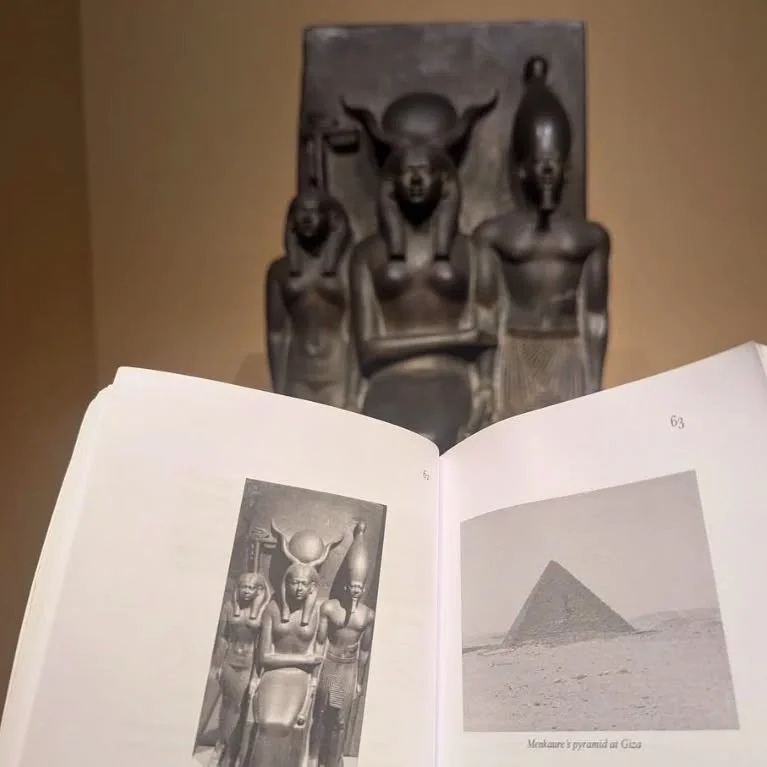
There are tons of pictures (awesome! I miss when stories came standard with illustrations or visuals).
I like how the book included parts where various other gods from assorted religions are addressed and speak throughout.
The book has a clear message of advocacy for animals without ever feeling trite, saccharine, or ham-fisted. It is eloquent, beautiful, poetic, thought-provoking, and haunting.
Some of these depictions of butchery really paint a mind picture, yet it avoids being gratuitously gorey or graphic.
This book is intense and otherworldly; it truly accomplished a sense of traveling to another realm out of time and space as we know it. It is the feeling you get while you read it. It is a traversing of worlds while always staying true to the message. I am so impressed. Really. I can’t wait to read it with friends.
It is a wonderful book. Following the ancient genre of laments, here a priestess of Egyptian goddess Hathor/Hetheru sets out to confront humanity with the discrepancy between the cults of gods who manifest themselves as animals and sacrificing (i.e. tormenting and en masse slaughtering) animals for the same gods. In addition to the general human cruelty towards animals practiced in the name of religions.
I really appreciate the author’s sensitivity towards all kinds of oppression including the application of exonyms coined by conquerers — importantly the name Hathor is such a Greco-Roman exonym for Hetheru. However, if the title was Hetheru’s lament, even fewer people would have a clue what the book is about. The introduction reflects on this and many more tricky problems.
Although as far as I managed to find out, the author has not academically studied Egyptiology or ancient languages or history of religions, they have thoroughly studied a lot of ancient religious (not only Egyptian) texts and academic literature and incorporated this knowledge in this book. One can choose to only read the lament but it is worth to read the footnotes which explain the sources that inspired each part of the main text.
I also appreciate that the Introduction clearly states the agenda: this is “literary propaganda” against the ancient and widespread abuse of non human animals by humans. I also find the project to write a text in such an ancient genre as the lament, in the 21st century, very respectable. And at the same time the wording is very much of today, very readable. I highly recommend this book for anyone interested in ancient religions and/or in the plight of non human animals.
This is an amazing journey through time, space, and humanity that will open your mind and deepen your understanding of a variety of context that connects in a real way to our current society. The author is extremely skillful in the way he weaves religion, society, myth, culture, and tradition through an accessible lens. You will want to dig further into this topic straight away. An instant recommendation.
Amazing book, I, perhaps naively, had no idea how far animal ethics conversation went back in history and was pleasantly surprised to see the evidence given in this book. It’s told in a way that is easy to understand but still very informative — honestly would be a great starting point for people who are new to animal ethics and a great supplement for people who have done the research and are continuing their bank of knowledge. A modern classic and something I’m so proud to have on my shelf.
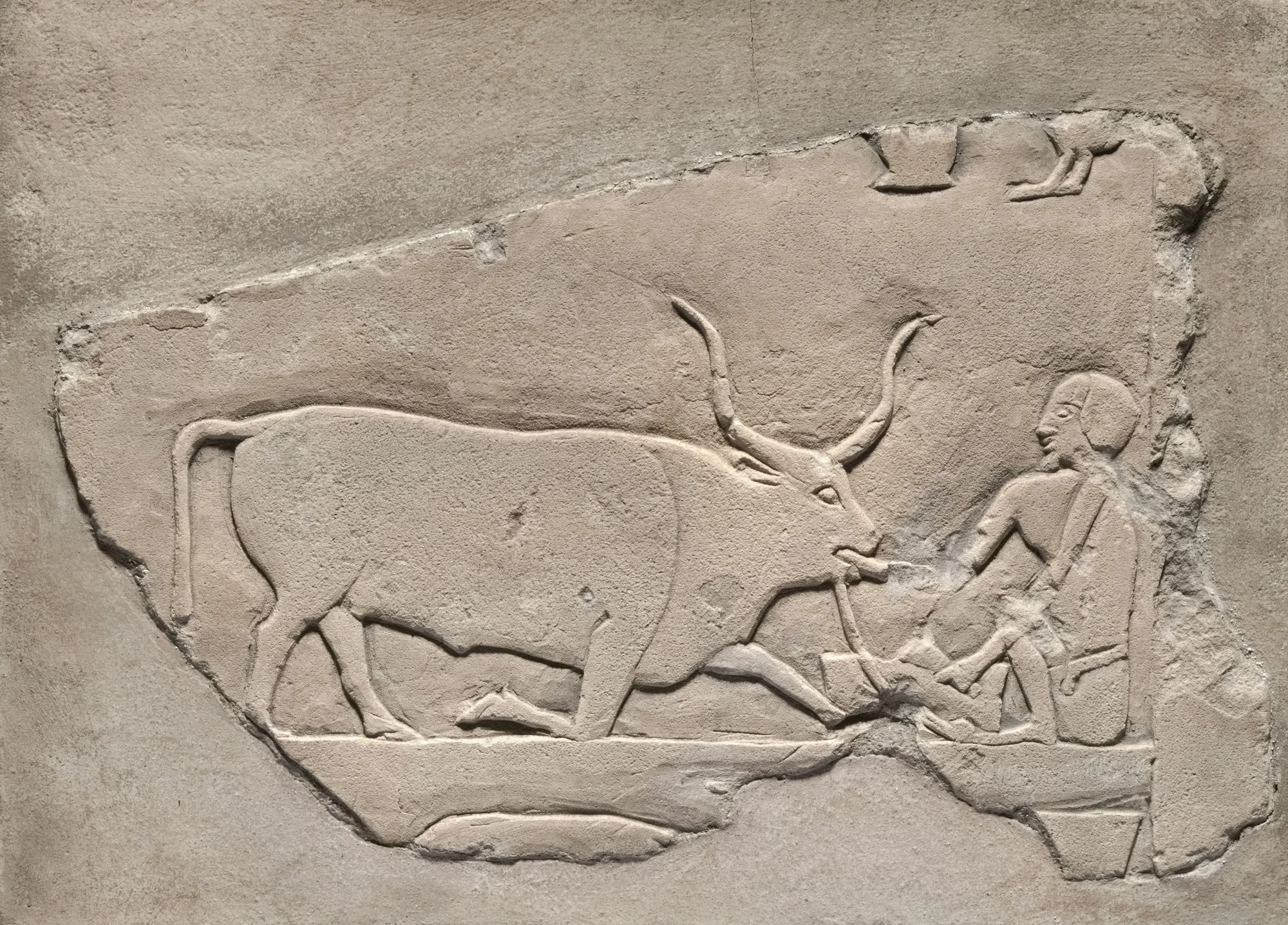
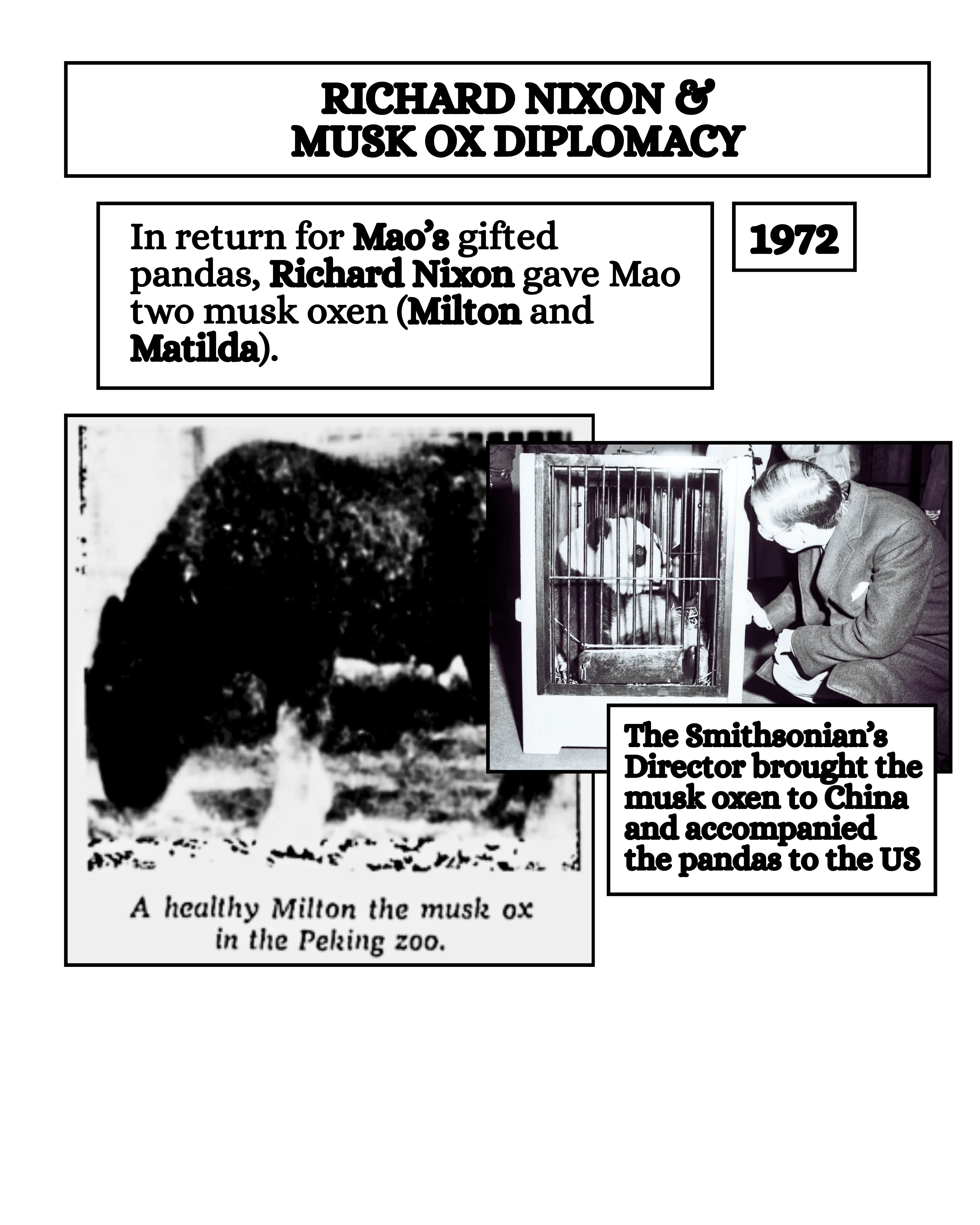
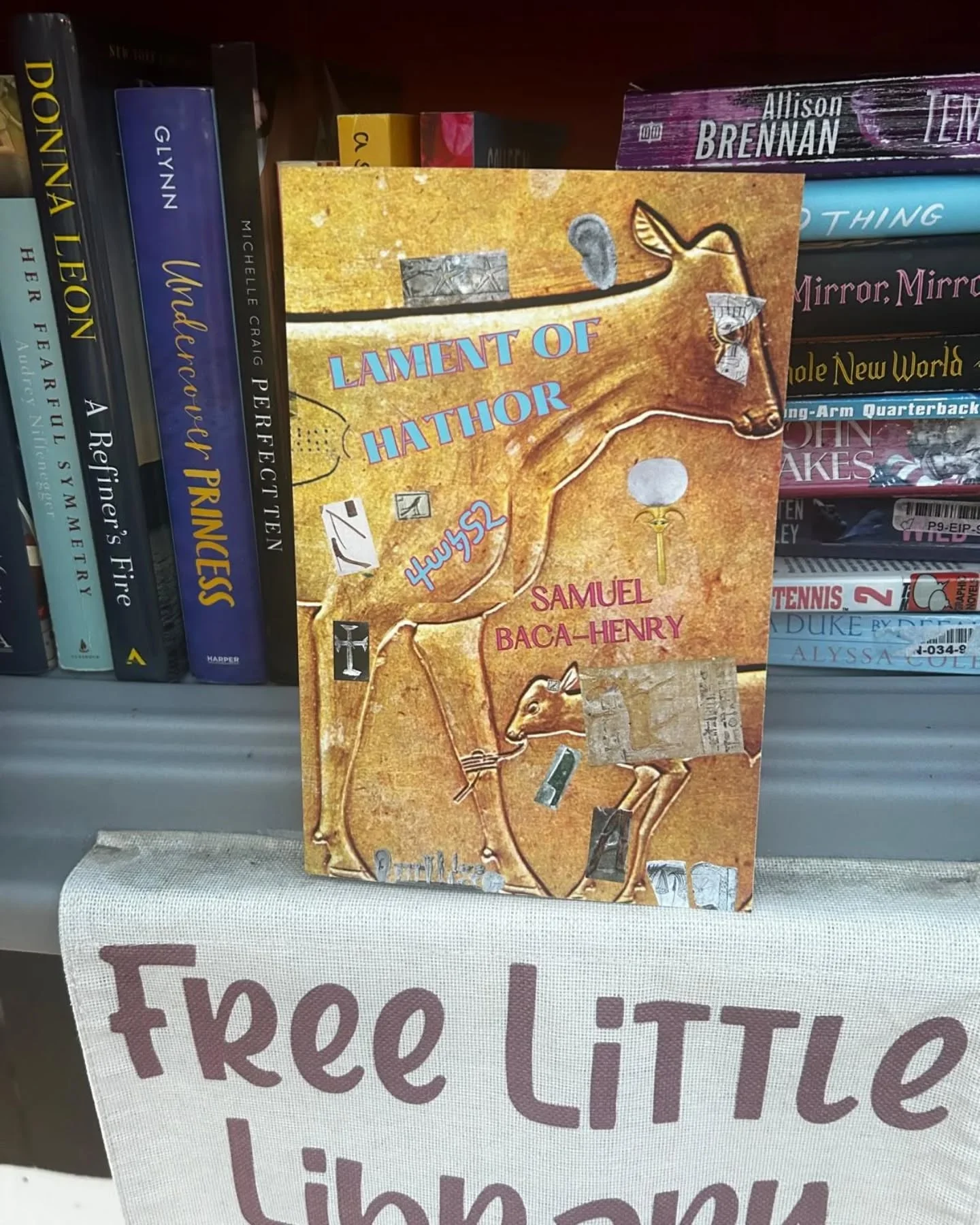
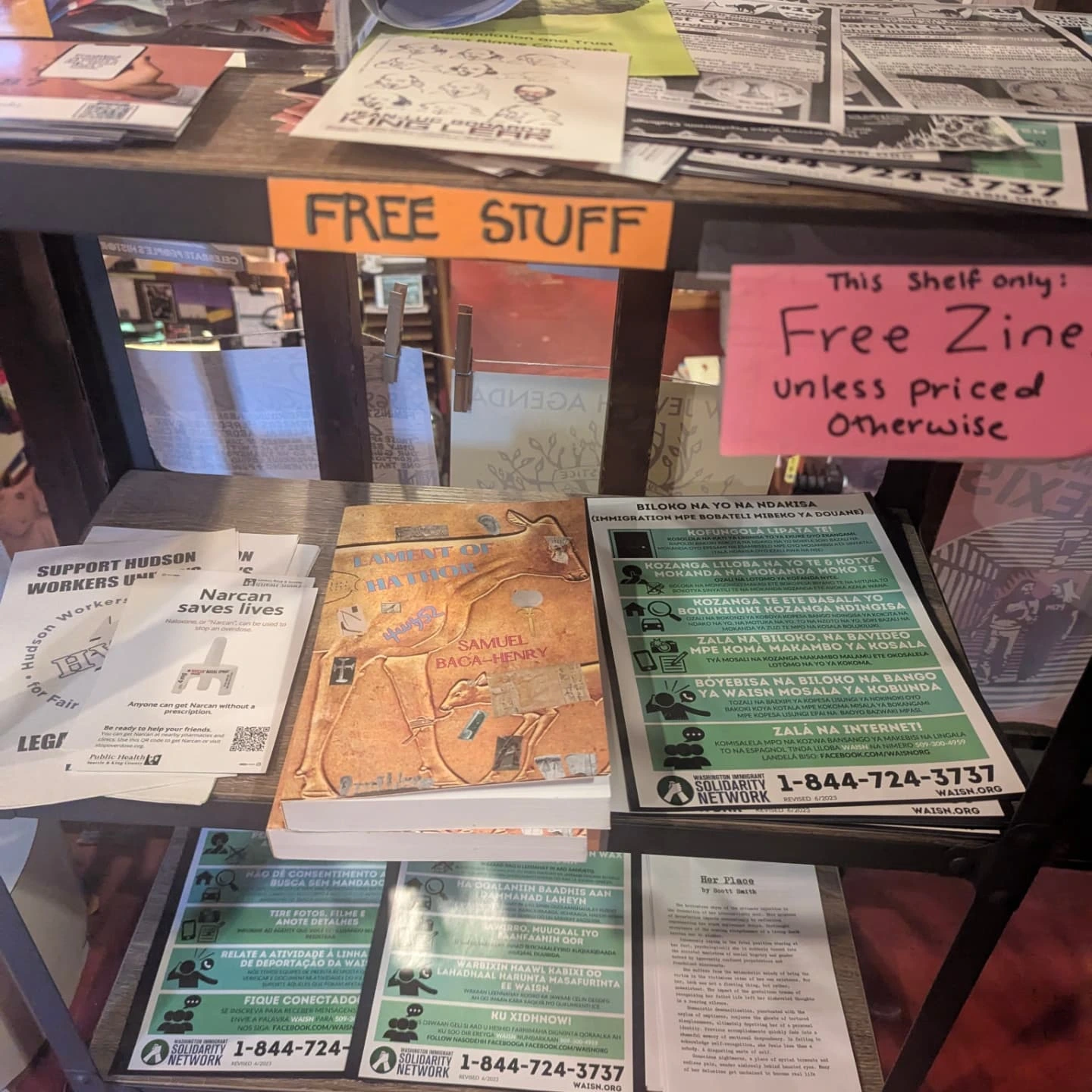
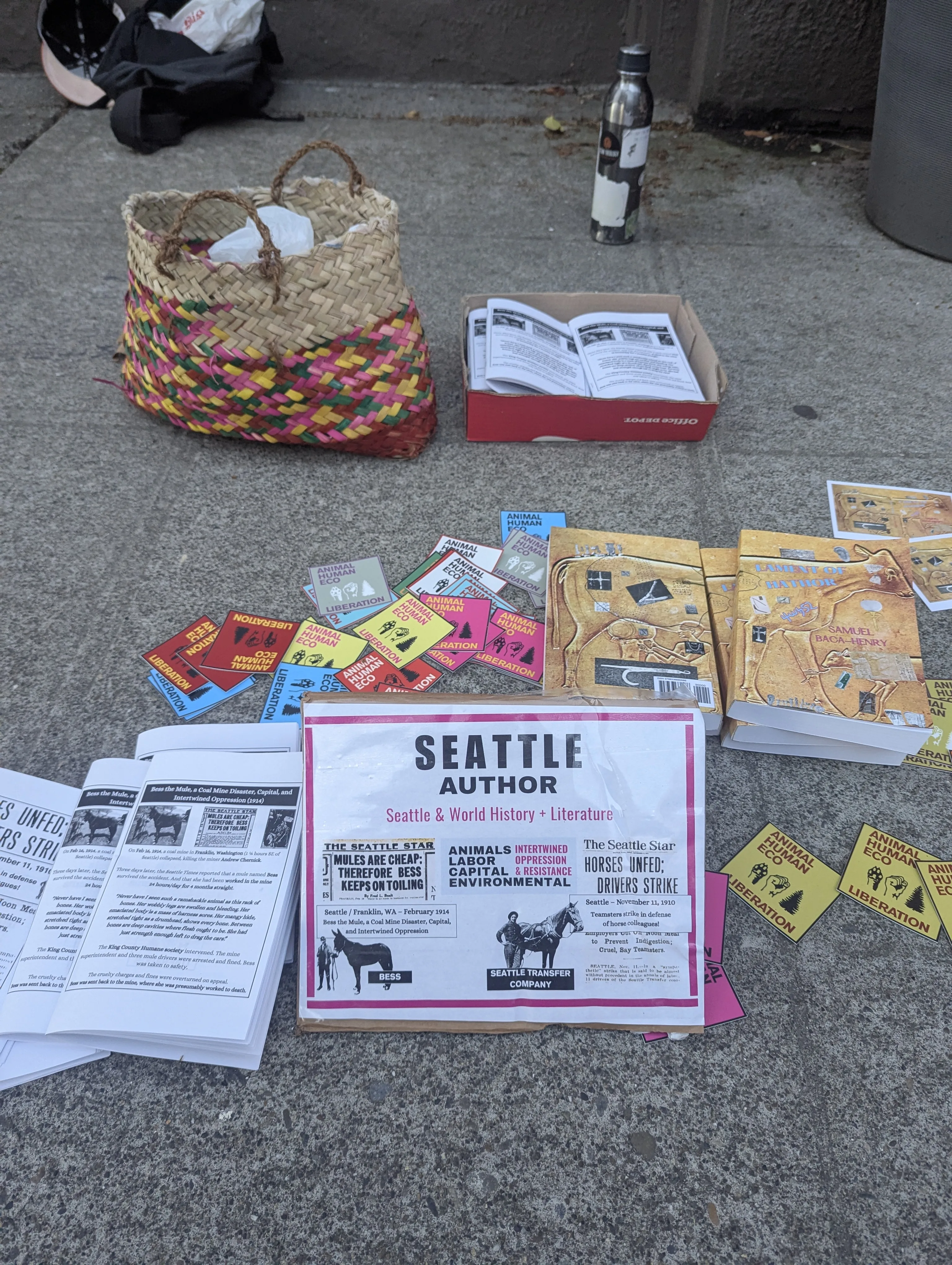
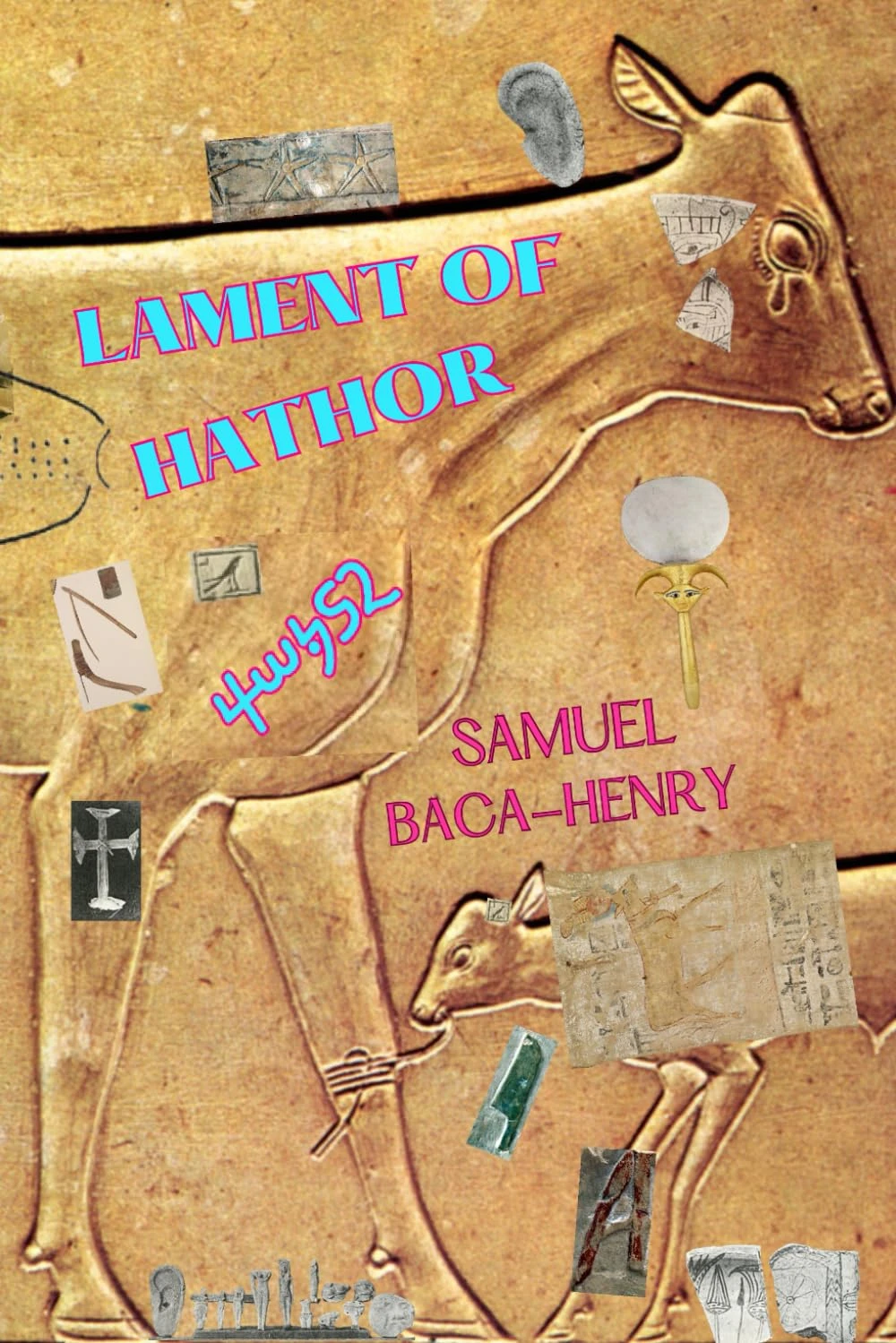
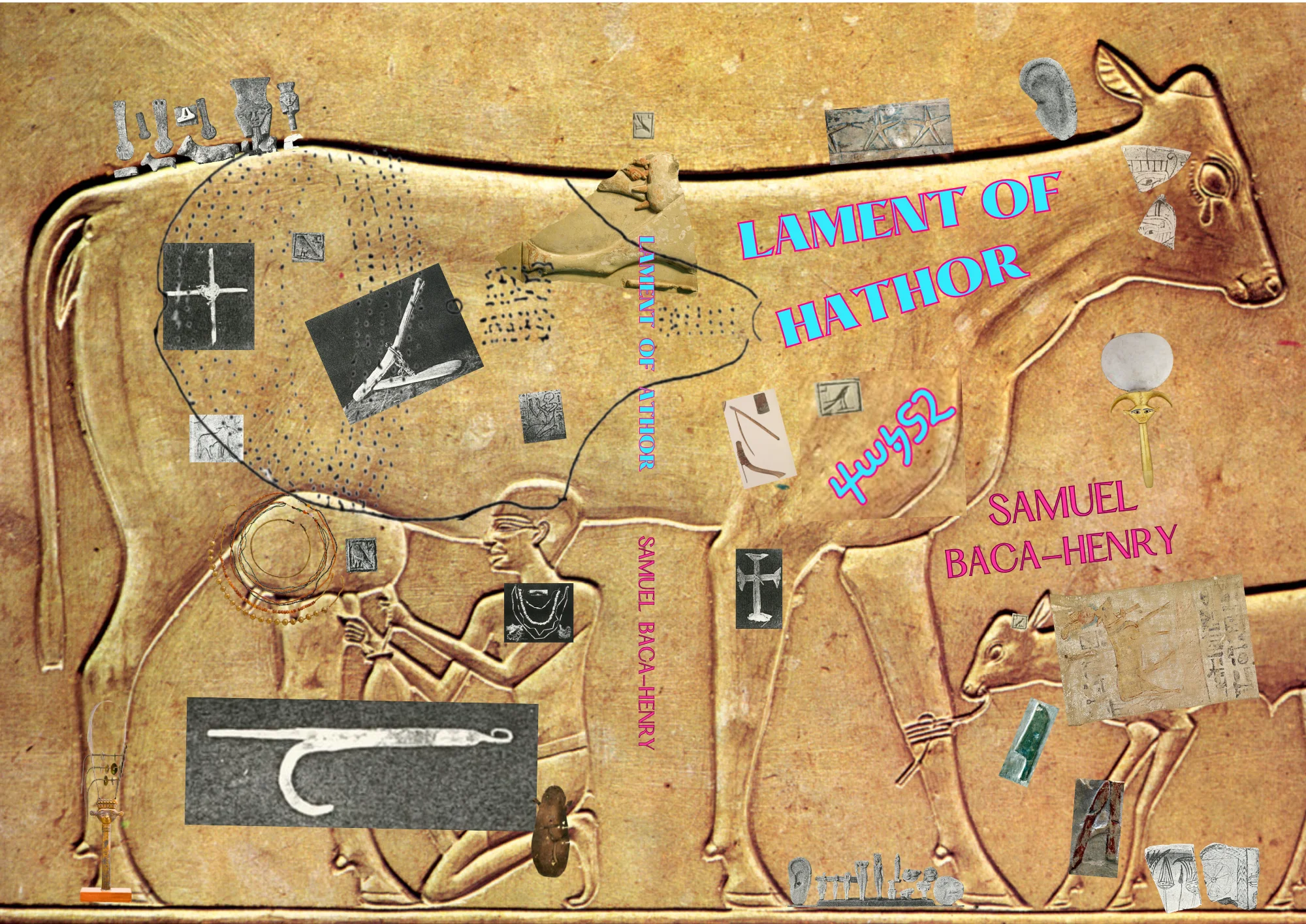
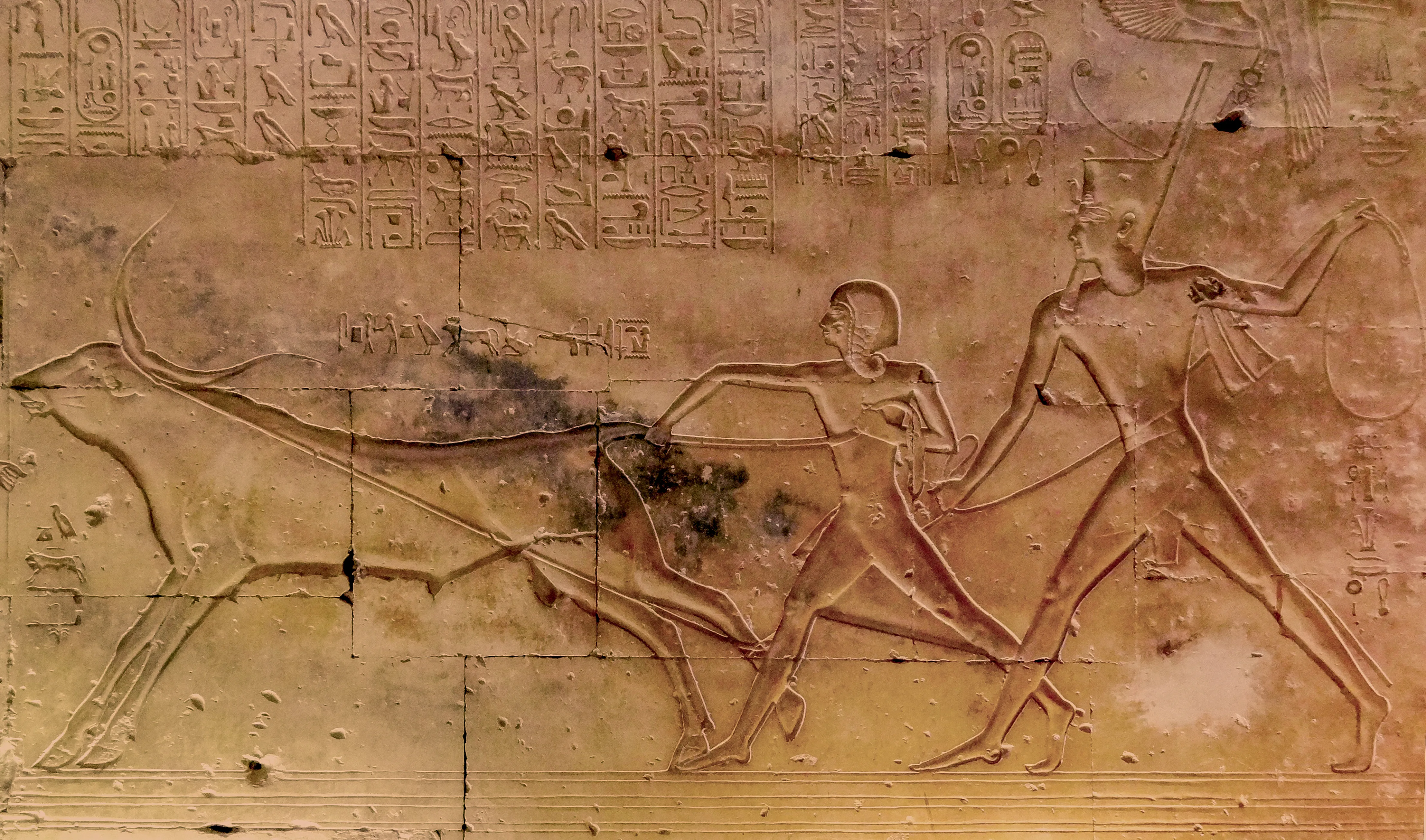
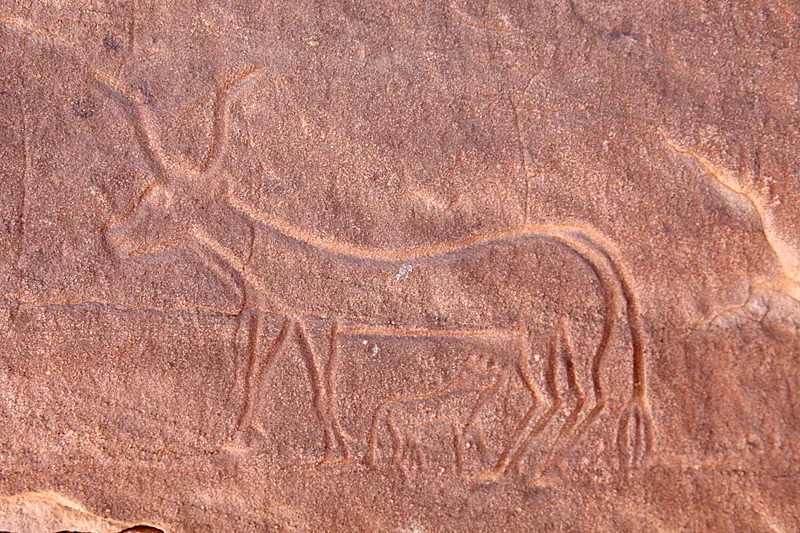
Even the cover of the book tells the story. It features the circa 2,000 BCE sarcophagus of Queen Kawit, Priestess of Hathor and King’s Beloved Wife of Pharaoh Mentuhotep II. The engraving shows a mother cow crying. Her male calf is tied away from her milk, which a human takes from her. This is emblematic of present-day dairy practices that have been taken to further extremes.
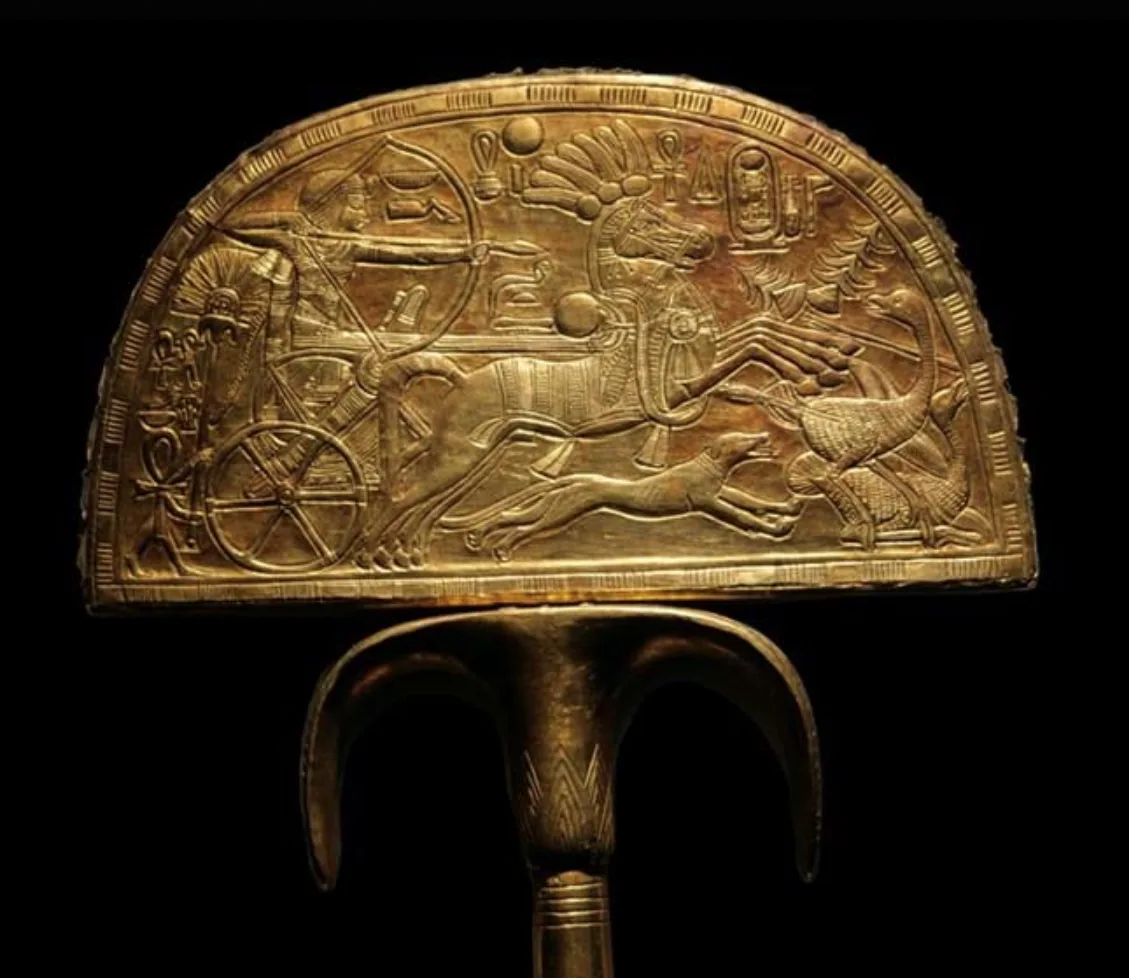
On other funerary objects, Queen Kawit, Priestess of Hathor, is shown giving and receiving slaughtered cows, ducks, and other animal offerings.
From my interview with Kim Stallwood.
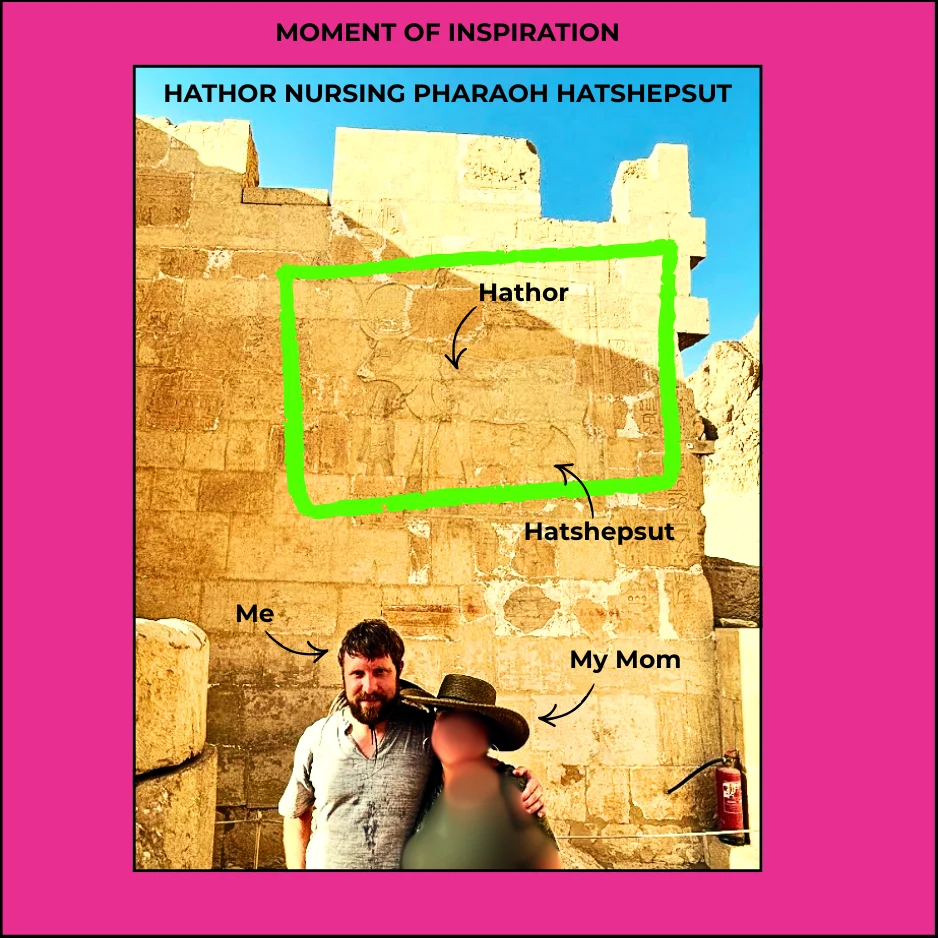
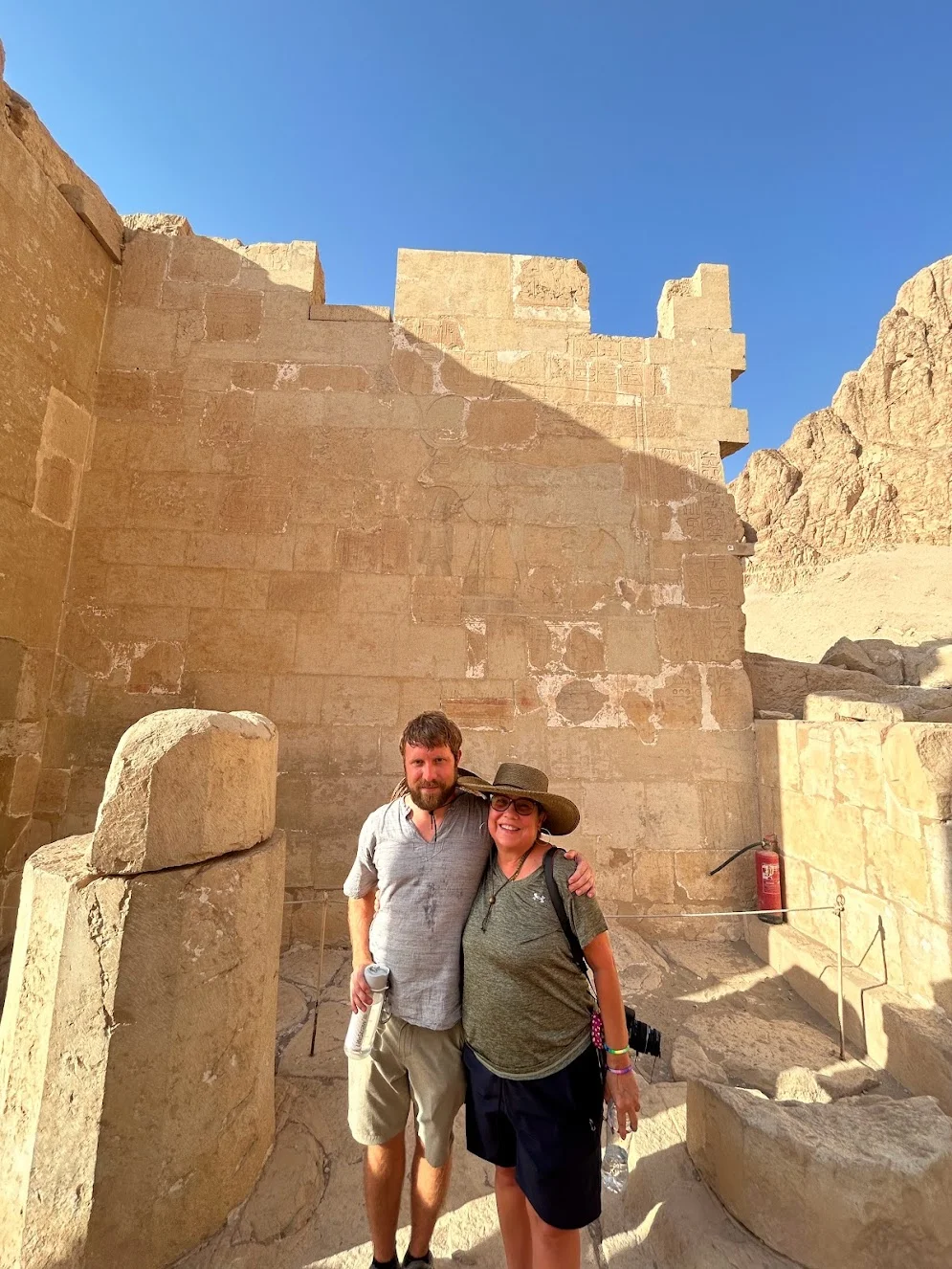
In autumn 2023, my parents invited me on a trip to Egypt. On the second day, we crossed the Nile from Luxor to the west side and started at the temple of Hatshepsut, one of the female pharaohs. She had a massive mortuary temple complex in this area. The sun sets in the west—a common symbol of death and the afterlife.
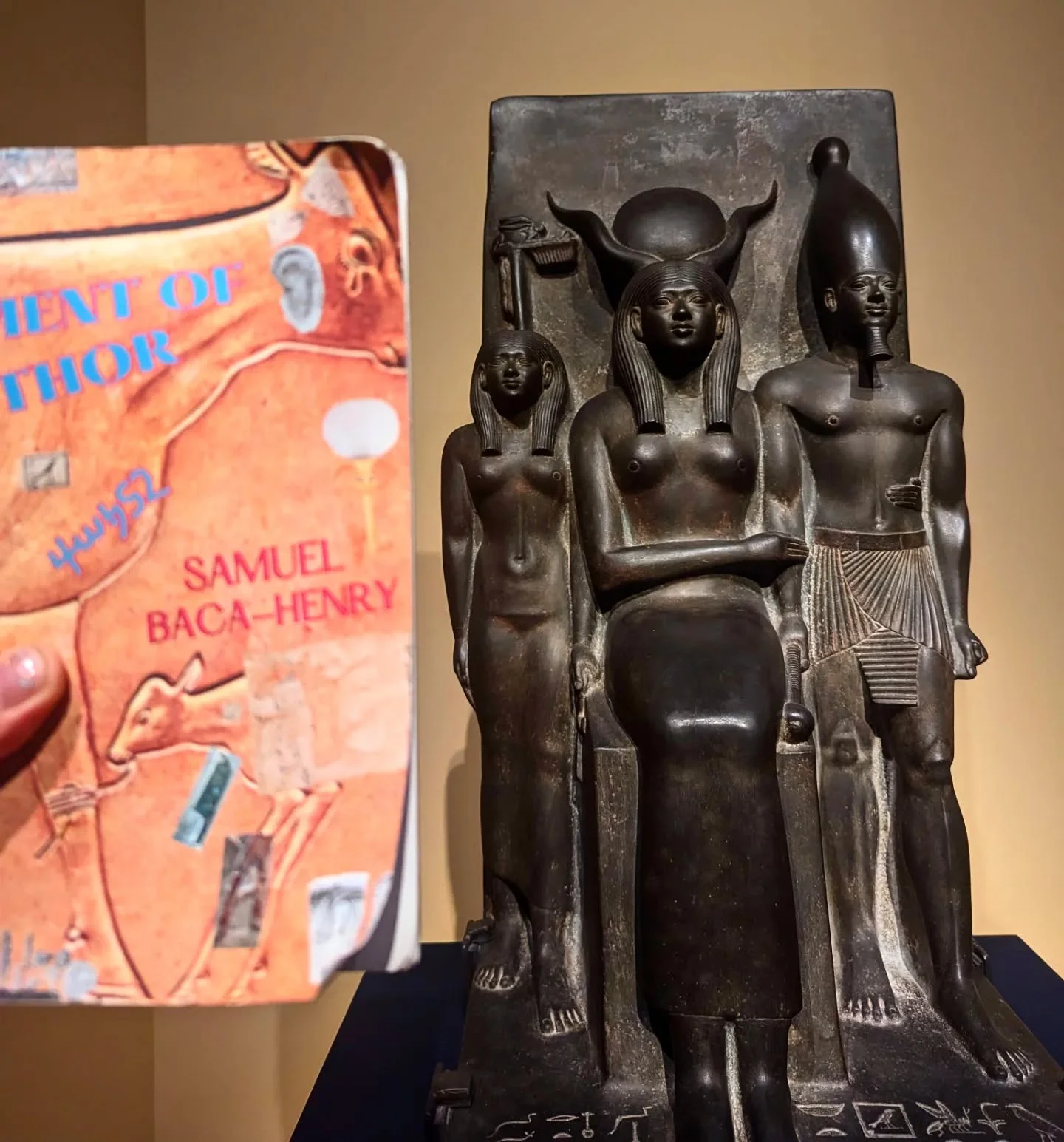
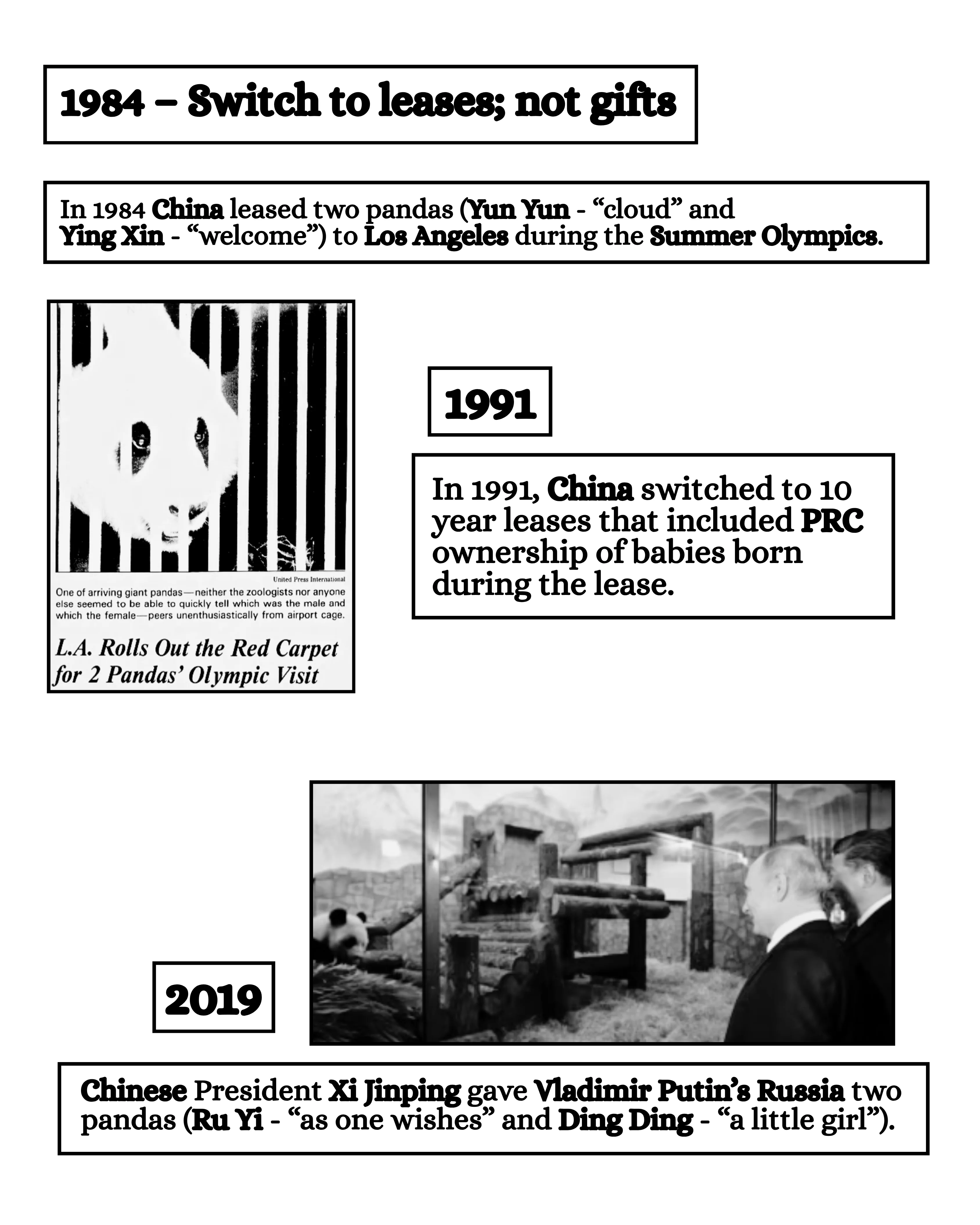
Walking around, I suddenly saw a carving on one of the walls: the goddess Hathor in cow form nursing Hatshepsut as a small person. I knew Hathor, a cow goddess, symbolized motherly love among other things.
It hit me immediately in the heart. People looked at all the animals and asked, “Which one is a great mother that we can have as a symbol for motherhood?” They saw the cow with her calf and chose her.
Yet the way we (and the ancients) treat actual cows and their calves is horrendous—within the dairy, meat, leather, rodeo, transport, and other industries.
That contradiction, hypocrisy, and symbolic use for power all hit me at once. I called my mother over, told her what I felt–how they revered the cow as the perfect mother while we tear calves from their mothers in dairy farms. We stood together and got a picture. I knew something was happening, though I didn’t fully understand it at the time.
Once I got back, it stayed in my mind. I couldn’t stop feeling it.
That feeling birthed my book and mission.
The lamentation is one of the oldest forms of oral and written literature within the so-called Fertile Crescent and Egypt (and myriad forms globally).
It is typically a raw, inconsolable expression of grief and rage at the destruction of a city-state, society, and/or the deaths or disappearances of loved ones and/or deities.
The Lament for Ur3 is a well-known Sumerian lamentation for the destruction of their city-state Ur by the Elamites circa 2000 BCE.
The Lamentations of Ipuwer is a circa 2000 - 1800 BCE Egyptian literary work that laments the upheaval and disorder of society after the fall of a strong central pharaonic state. It may be a work of conservative authoritarian theocratic political propaganda showing the risks of a loosening grip on absolute power and the benefits of a strong patriarchal pharaonic rule.
The Lamentations of Isis & Nephthys is a circa 2nd century BCE recording of a version of the much-older tradition of the despair of the Egyptian goddess-sisters Isis & Nephthys after their brother Set (husband of Nephthys) killed their brother Osiris (husband of Isis).
This book began as a lamentation, but incorporates other genres, including Sebayt (a.k.a. Instructions or Proverbs).
These collections of maxims, aphorisms, proverbs, and other advice were common in many of the book’s regional and temporal cultures. Oftentimes they took the form of advice from a father to a son (elite or royal). They were useful ethical and practical guides to rule and behave in society. In the European Middle Ages and Renaissance, this genre continued as the “Mirror For Princes” literary tradition.
3 “Ur” sounds like “Hathor,” so I chose this title.
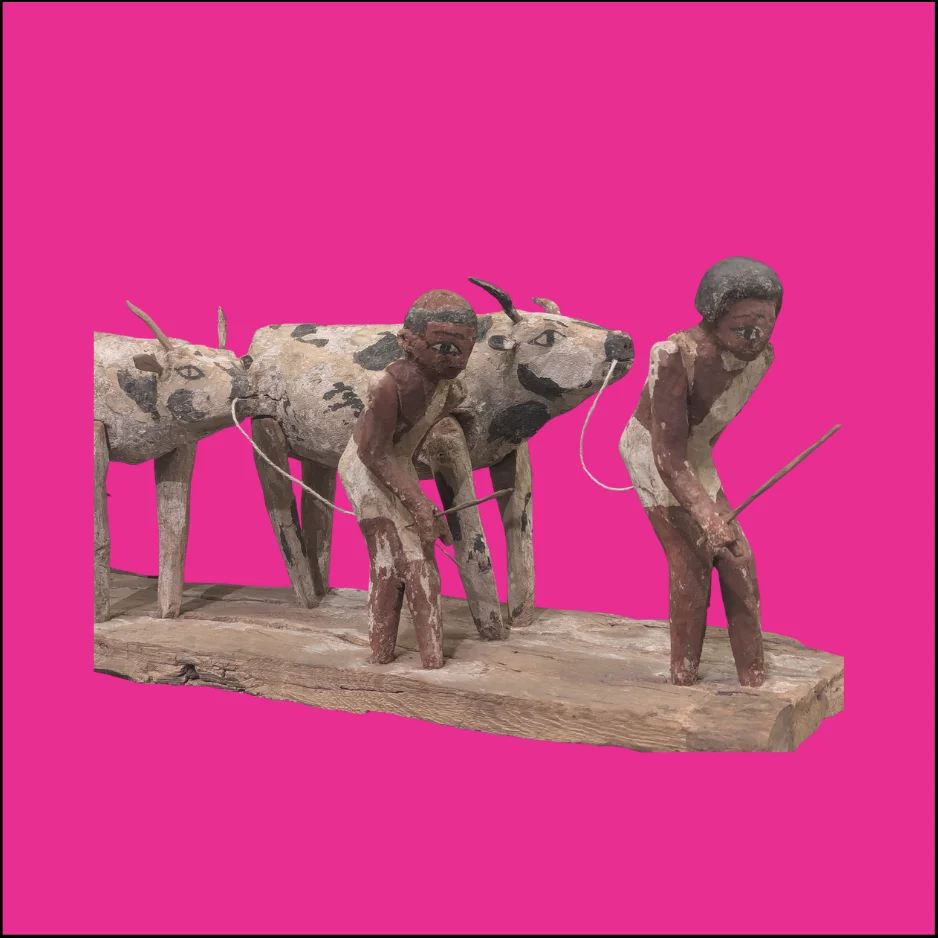
I found it difficult to separate “Ancient Egypt” from its adjacent and semi-adjacent cultures or its prehistoric pasts. After all, they were trading, warring, marrying, occupying, cattle-raiding, mining, sailing, influencing, etc.
Borders are not as fixed as contemporary maps make them appear (and impose upon regions and peoples).
The scope of the Egyptian kingdoms’ spans of control varied greatly throughout the time periods of this book.
At times there was no single state of Egypt.
At other times, Egyptian pharaohs exercised control over parts of Nubia, the Levant, Mesopotamia, and parts of contemporary Libya, Chad, the northwestern Arabian desert trade routes and mines, and other regions outside contemporary Egypt’s borders (which present total area was not always under the authority of an Ancient Egyptian state).
This control varied from tributes, ransoms, vassalage, allyship, and occupation.
And in several periods, kingdoms from other areas exercised control over parts or all of former and contemporary Egyptian regions.
These were intermingled cultures. We find temples to Levantine deities within Egypt and to Egyptian deities outside Egypt.
Therefore, I bring the book within its northeast African setting as well as the eastern Mediterranean, Anatolia, the Levant, Mesopotamia, Persia, and the Indian subcontinent.
I interweave (and at times subvert) goddesses/gods/sacred cows and literary/mythological/philosophical works, histories, and symbols from these areas.
In future versions or stories, I will expand further and incorporate peoples, animals, and deities from additional regions in greater depth.
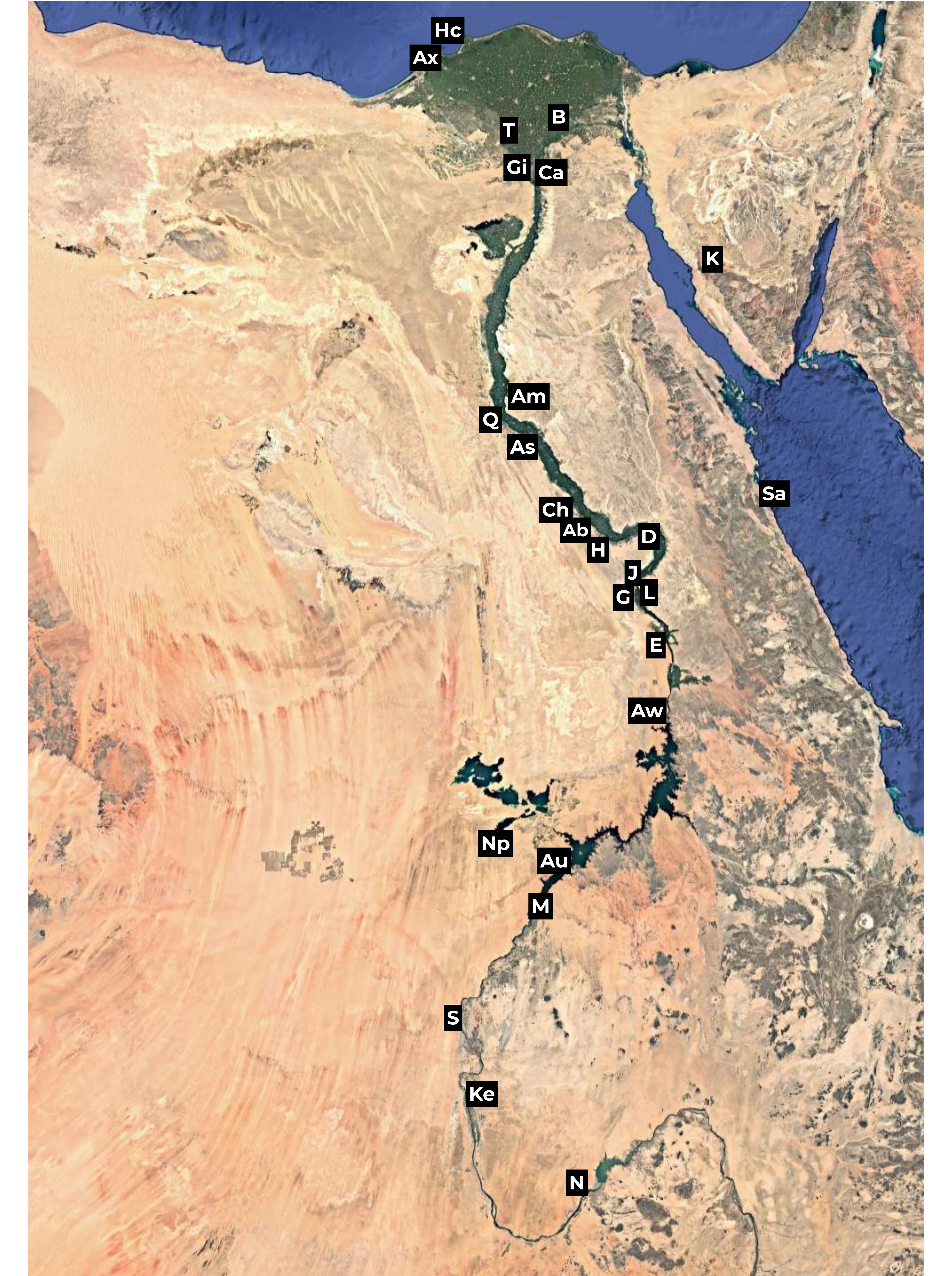
B — Bubastis (Per-Bast)
D — Dendera (Iunet)
E — Edfu (Behdet)
G — Gebelein (Per-Het-Heru)
H — Nag Hammadi
J — Deir el Medina (Djeser-Djeseru)
K — Serabit el-Khadim (Djeser-Mefket)
L — Luxor/Thebes (Waset)
M — Mirgissa (Iken)
N — Napata & Gebel Barkal (Dju-wa’ab)
P — Giza (Rostau)
Q — Cusae (Qis)
S — Sedeinga (Atiye)
T — Terenuthis/Tarana (Mefket)
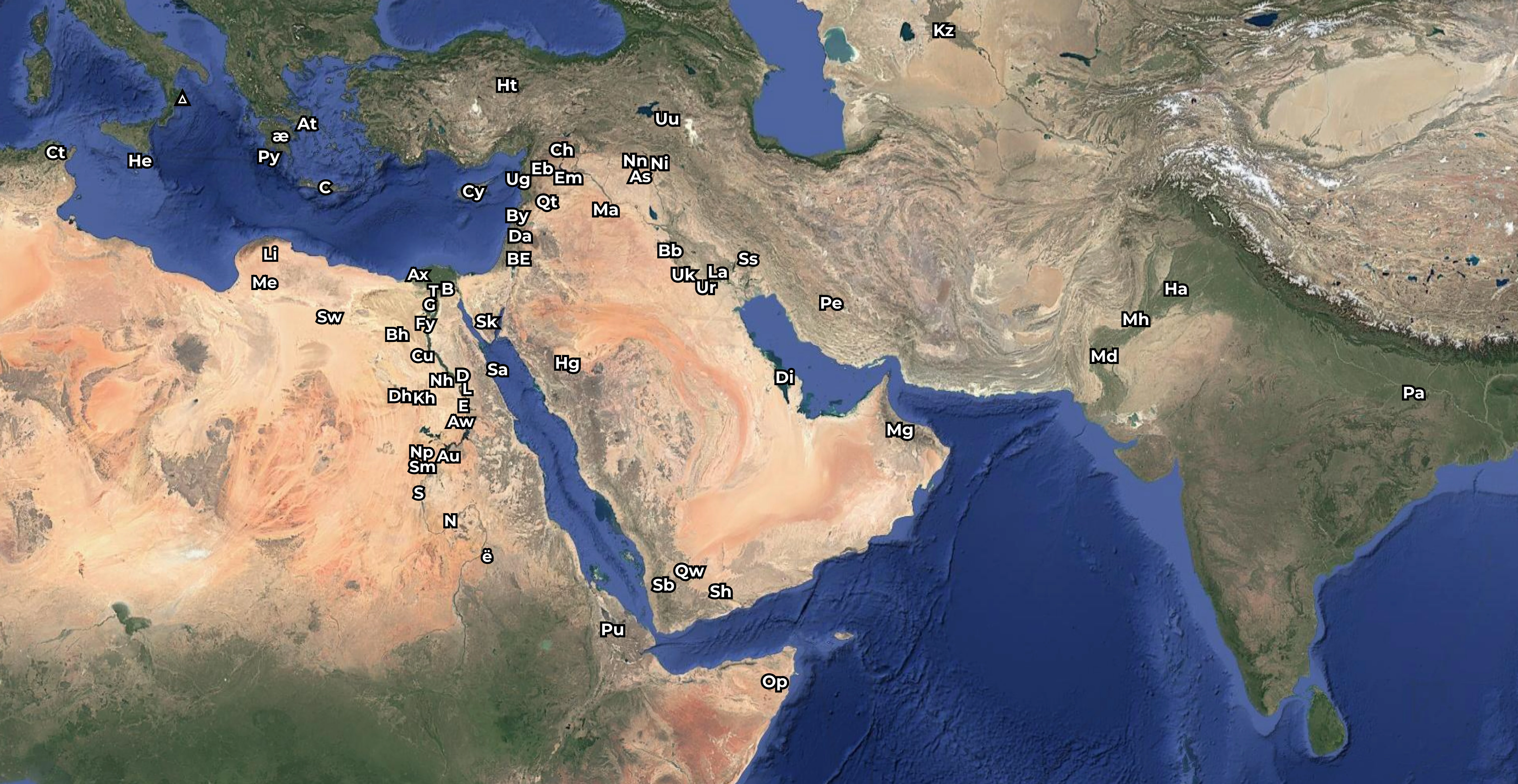
æ — Mycenae (Aqaiwasha)
As — Assur
At — Athens
Au — Abu Simbel
Aw — Aswan (Swenett)
B — Bubastis (Per-Bast)
Bb — Babylon (Sangar)
BE — Beth-El
Bh — Bahariya Oasis (Djesdjes)
By — Byblos (Kebny)
C — Crete (Keftiu)
Ch — Carchemish
Ct — Carthage
Cu — Cusae (Qis)
Cy — Cyprus (Alashiya)
D — Dendera (Iunet)
Da — Dan
Dh — Dakhla Oasis
Di — Dilmun
E — Edfu (Behdet)
Eb — Ebla
Em — Emar
ë — Meroë (Medewi)
Fy — Fayyoum (Shedet)
G — Giza (Rostau)
Ha — Harappa
He — Helios (mythical)
Hg — Hegra
Ht — Hattusa
J — Deir el-Medina (Set-Ma’at)
Ka — Kadesh (Qedesh)
Kh — Kharga Oasis
Kh — Khwarazm
Km — Khartoum
L — Luxor/Thebes (Waset)
La — Lagash
Li — Libu (nomadic tribe; Ribu)
Ma — Mari
Md — Mohenjo-Daro
Me — Meshwesh (nomadic tribe)
Mg — Magan
Mh — Meluhha
N — Napata
Nh — Nag Hammadi
Nh — Nineveh (Nil)
Np — Nabta Playa
Op — Opone
Pa — Pataliputra
Pe — Persepolis
Pu — Punt (Pwenet or Ta Netjer)
Py — Pylos
Qa — Qatna
Qw — Qarnawu (Minaean)
S — Sedeinga (Atiye)
Sb — Sanaa (Sheba)
Sh — Shabwa (Hadhraumut)
Sk — Serabit el-Khadim (Djeser-Mefket)
Sm — Semna
Ss — Susa
Sw — Siwa Oasis (Sekht-am)
T — Tarrana (Mefket)
Ug — Ugarit
Uk — Uruk
Ur — Ur
Uu — Urartu (Nairi)
△ — Croton
There is no thing called Ancient Egypt.
Is it the time of the Great Pyramids of Giza? Is it the time of Pharaoh Tutankhamun? Is it the time of Cleopatra? Is it the time of Roman occupation? If so, pre- or post- Roman persecution of Christians? Or is it the nomadic peoples who were harassed and subjugated, whose stories are not the same as those of whatever is meant by “Ancient Egypt.”
This book’s setting spans the time period from the lush Green Sahara region which thrived during the last Glacial Period (circa 115,000 – c. 11,700 years ago) until perhaps the 3rd century of the Common Era (CE/AD).
Its regions and cultural influences, allusions, and characters span from contemporary Libya, Italy, and Nepal.
Consider time flattened a bit when reading this book.
One may be disposed to see some throughline of “progress” via such references that might lead one to conclude that in the Early Bronze Age people were one way and over time they became more virtuous in their treatment of non-human or human animals, reaching an inflection point with the Zoroastrian, Hebrew, Jewish, early Christian, or Vedic/Hindu/Jain/Buddhist peoples.
That is not my intention.
I have tried to demonstrate and uplift those throughout all times (including pre-human hominids) who have advocated, witnessed, empathized, and helped the non-human animals so that we may be sustained, taught, inspired by, and thereby to hold ourselves accountable to those who fought before us.
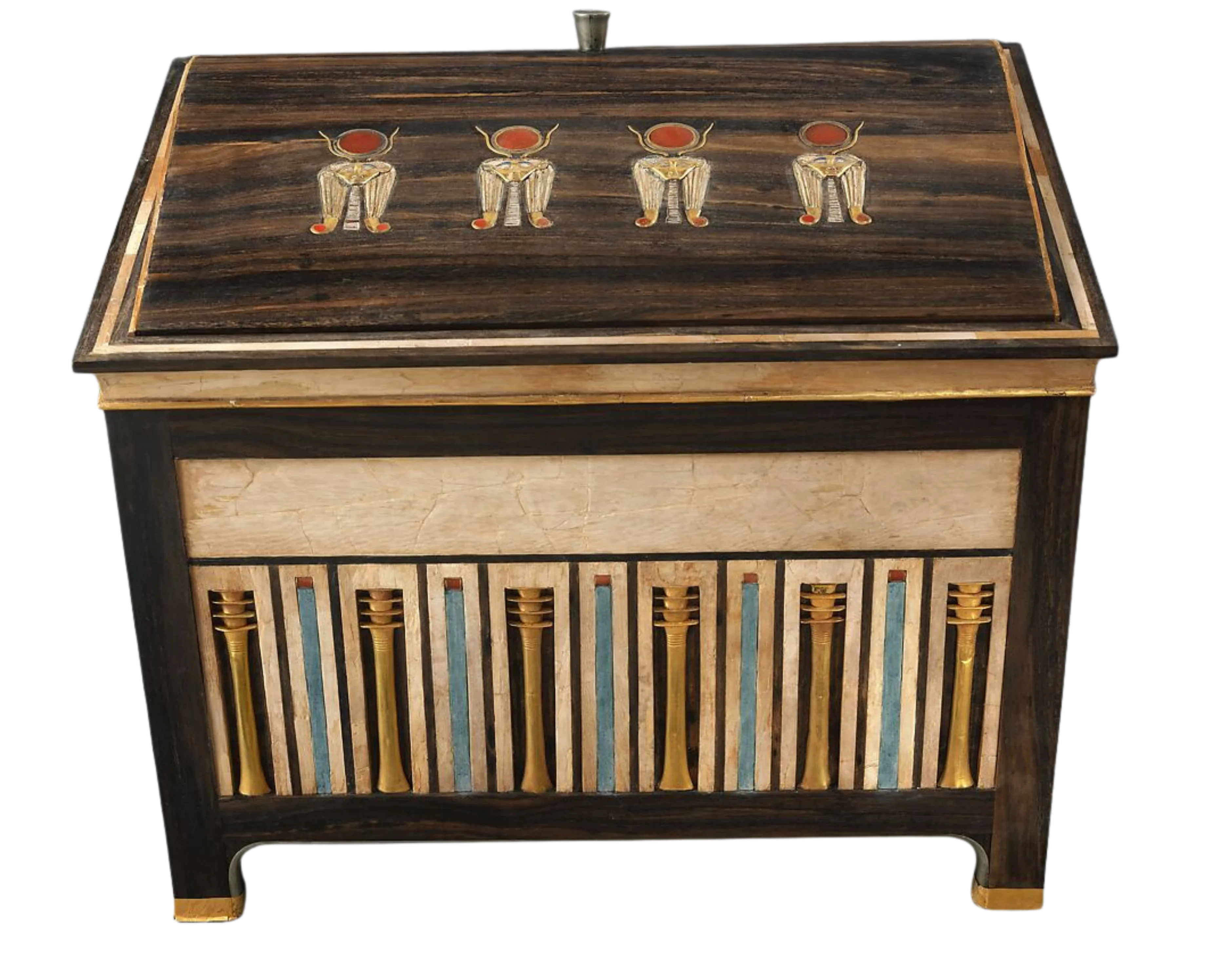
Some names are names that peoples use themselves for their spaces, selves, deities, places, bodies of water, non-human animals, mountains, valleys, stars, neighbors, and other things within their own and their historical antecedents’ (actual or claimed and/or mythological/cultural) times and places.
These are called Endonyms.
Other names are names that peoples, cultures, etc. are called by others.
These are called Exonyms.
For example, in United States American English, the people who call themselves Catalan, Catalonian, Españoles, or Spaniards (Endonyms)4 are usually called Spanish (Exonyms).
This book strives to honor peoples’ preferences to be known with their own names.
Since things become complicated when situating the story across many cultures and places and millenia (i.e. whose Endonyms of what periods to use? and how to also honor the “others”?), this book situates itself as a recollection of a fictional Priestess of Hathor of an unspecified time period.
Thus, I try to use names that were used by Egyptian (vaguely defined) peoples themselves.5
For example, at the beginning, the book will switch from calling Hathor “Hathor” to calling her “Het-Heru”, an Endonymic name of Hathor in ancient Egyptian/Kemetic languages written in a Latinized English script.
While there are several Kemetic versions, I have chosen this one.6 If you believe I should use a different version, I would love to hear from you.
The name “Hathor” after all, is a Graeco-Romanized occupier’s form which dominated a significant set of images of ancient Egypt following the conquests by forces of the Macedonian warlord Alexander the Great and later Roman, and European occupying powers.
Those of Alexander defeated not an indigenous Egyptian kingdom, but a satrapy ruled by Achaemenid Persian conquerors led by Cambyses II, son of Cyrus the Great.
Given that some “outsiders” are incorporated within the typical Ancient Egyptian umbrella (e.g. Neith/Nit from Libya, Astarte and Ba’al from the Levant), we will further extend this principle to these peoples by using their own Endonyms rather than the traditional Egyptian Exonyms for them.
We must also note that many different beings are amalgamated under the name Het-Heru. Are we referring to Het-Heru at Iunet?7 Of Het-Heru, Mistress of the Sycamore? Of the Wandering Goddess? Of Meroitic Atari?
This book alludes to these questions and implications throughout the story while striving to maintain intelligibility and multiple interpretability.
In another example, this book calls the Mediterranean Sea the “Wadj-wer” (“great green” in Kemetic), as one would from the assumed perspective of the frame narrator Het-Heruhat, Priestess of Het-Heru.
Some might object that we ought to use the more commonly used names in contemporary Euro/Anglo/US-centric usage, even when they originate from conquering peoples. For, all peoples originate from conquered and conquering peoples.
It is true that we all originate from conquered and conquering peoples.8
Within a Dominant Discourse, this is always also the result of intentional strategy and tactics of domination and tertiary side-effects; in Ancient Egypt’s case through European/Anglo/US-centered hearkenings back to mythological Graeco-Roman origins. This is called “Western Civilization,” “Classical Civilization,” or even “the origins of Civilization” where I come from.
Rhetorically, I will say that we already primarily use Kemetic names, e.g. the deities Aten, Bastet, Bat, Bes, Geb, Imhotep, Khnum, Ma’at, Mertseger, Min, Montu, Mut, Kehbet, Nut, Ptah, Ra, Sekhmet, Seshet, Set, Sobek, Taweret, Tefnut, etc. The deities called by their Graeco-Romanized versions are indeed the minority in contemporary Euro/Anglo/US-centric usage.
As a side benefit of this stance, our knowledge of and appreciation for Het-Heru’s place in society deepens once we see peoples and places named after her.
For example, we learn that “Het-Heru” means “House of Horus” (“House of Heru”).
Likewise, rather than using the names Hathor and Gebelein, by using the Kemetic names Het-Heru and Per-Het-Heru, we learn that the city we know as Gebelein was named the “House of Het-Heru” (“Per” means “house”).
Similarly, we see the reference to Heru (a.k.a. Horus) in names like the pharaoh Sneferu’s.
And, this avoids the awkwardness of referring to places named after Kemetic gods by names of conquering gods (e.g. Herakleopolis, formerly Henen-Nesut, renamed by Graeco-Roman conquerors after Herakles a.k.a. Hercules).
In this stance and reasoning, I am influenced by the Afrocentrist perspectives and arguments I learned from Drs. Molefi Kete Asante, Maulana Karenga, and Nah Dove. I encourage the reader to engage with their words. Refer to the bibliography.
Some people will continue to use the “Hathor” forms, and fashions and symbolism will change over time. That’s how it always goes with names.
This book is ideological symbolic literary propaganda and principles that I hope will be relevant to and just during, yet transcend, generally beyond my own and all future times and spaces.
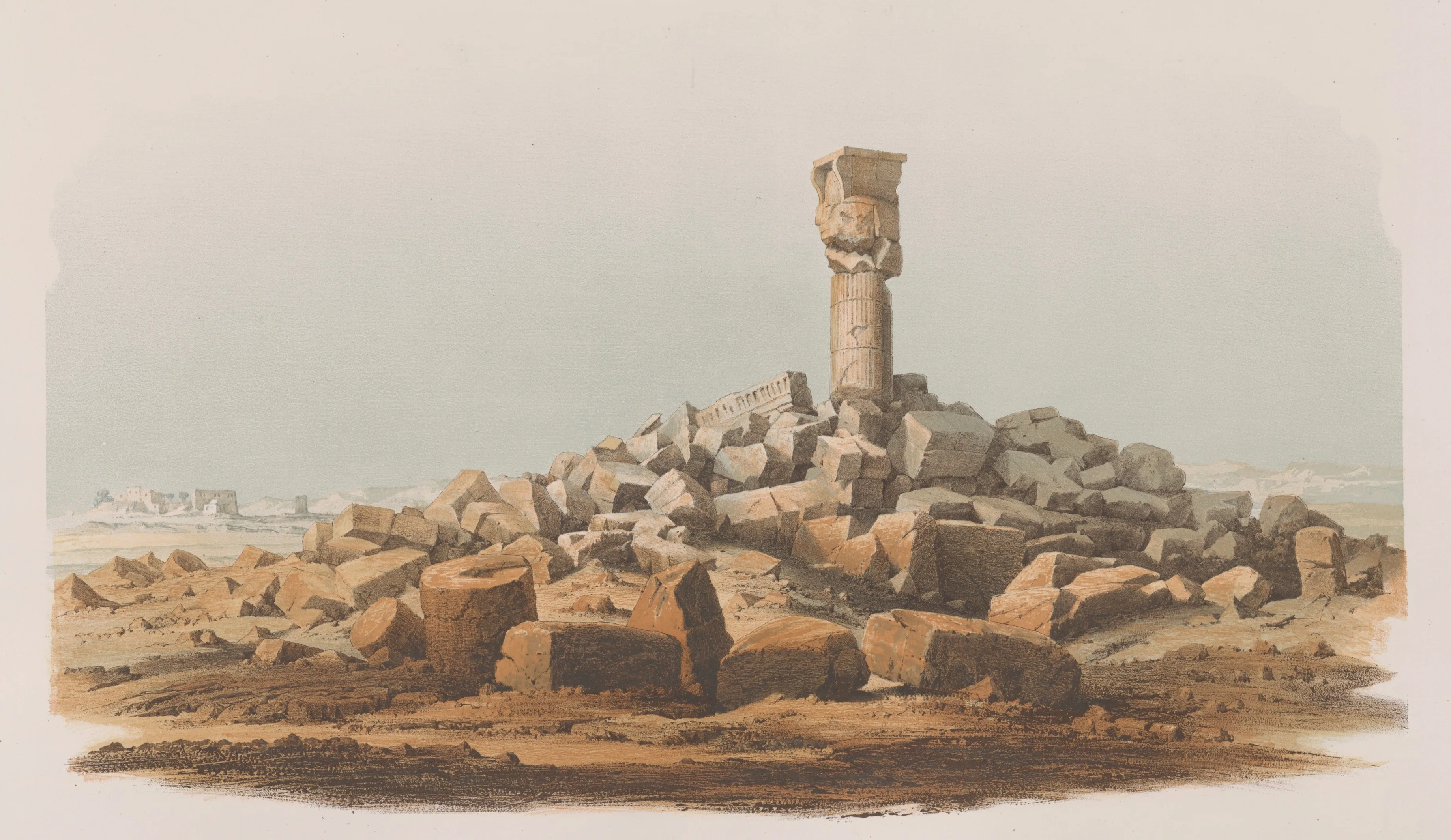
4 Or holding other identities but living upon contemporary Spanish territories.
5 There are certainly instances where I am inconsistent with this. I am actively switching to this format. Please email me if you spot any mistakes.
6 Note that there are several Ancient Egyptian languages and writing systems across the several thousand year time period of this book. And there were always other languages used within Ancient Egypt, including languages of power, diplomacy, administration, and trade.
7 Contemporary Dendera.
8 Note that contemporary narratives center a single evolution of homo sapiens originating on the African continent. And a seemingly infinite tree of organisms of other species and Domains, as well as noncellular, elemental, and other states of matter and non-matter in the past and through which we continually intermingle in our present.
I was really inspired by the Lotus Sutra, a Buddhist text (with the density and the overwhelming lists ... the animals that show up, the deities that are invited in), and other mythologies where there are these endless lists of people or animals who are summoned. A big inspiration is a work from 10th-century CE (340s AH) Basra, Iraq. There’s a group called the Brethren of Purity who created an encyclopedia studying all sorts of knowledge, and the longest piece within it is called The Case of the Animals Versus Man Before the King of the Jinn. In it, the animals take the humans to court, and there are again these extensive lists of all the different animals and the points they’re making. I was paying homage to and referencing especially those two works.
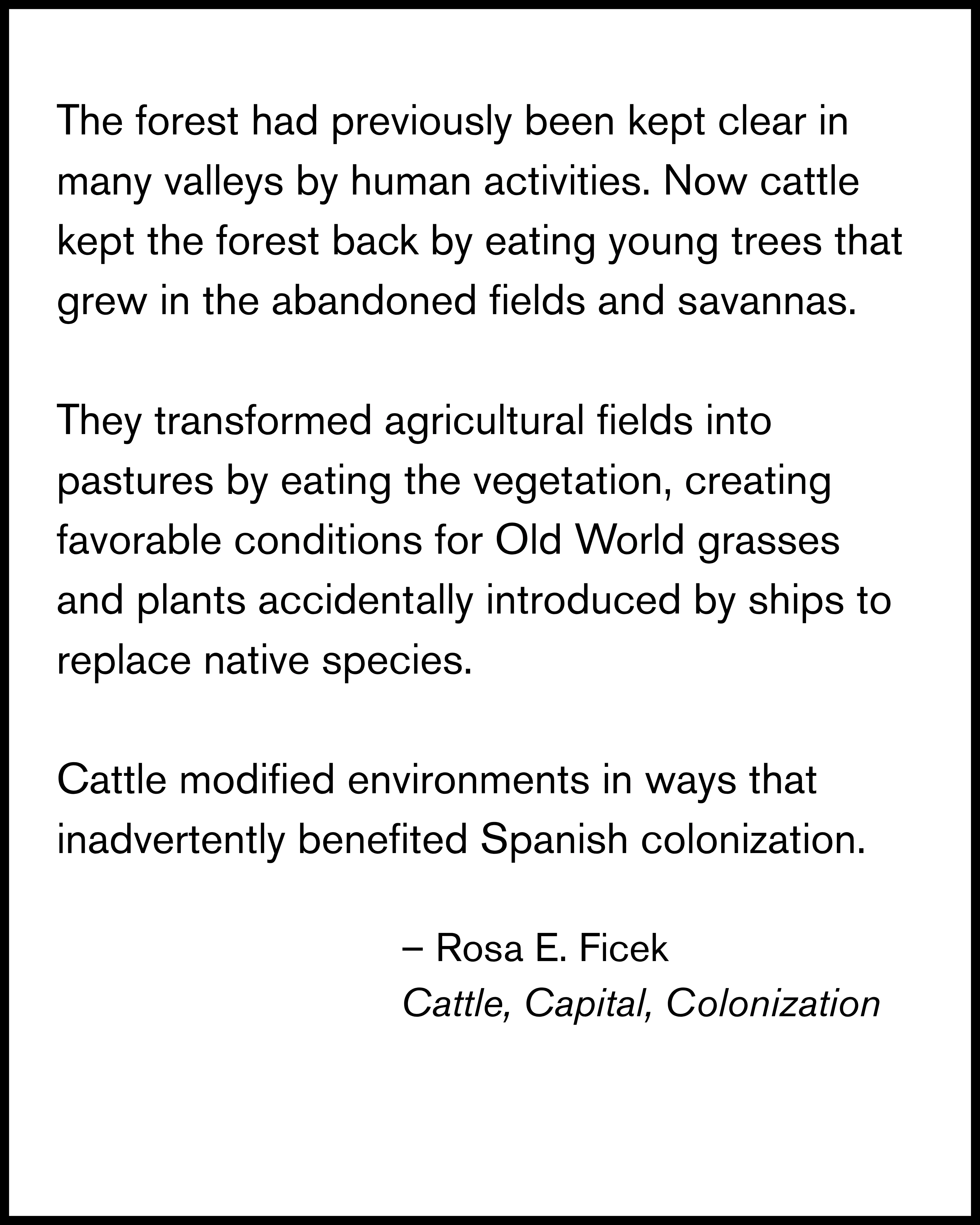
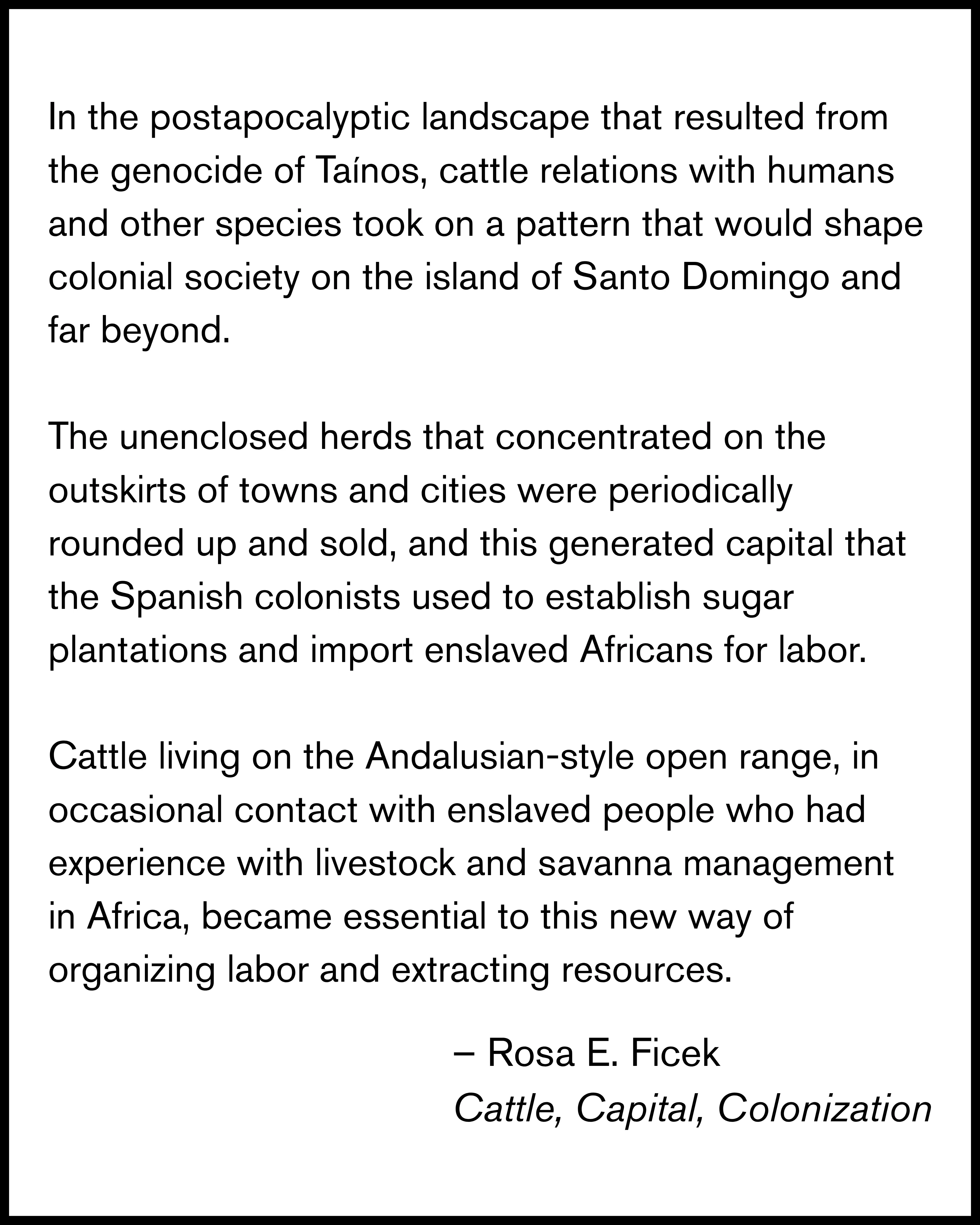
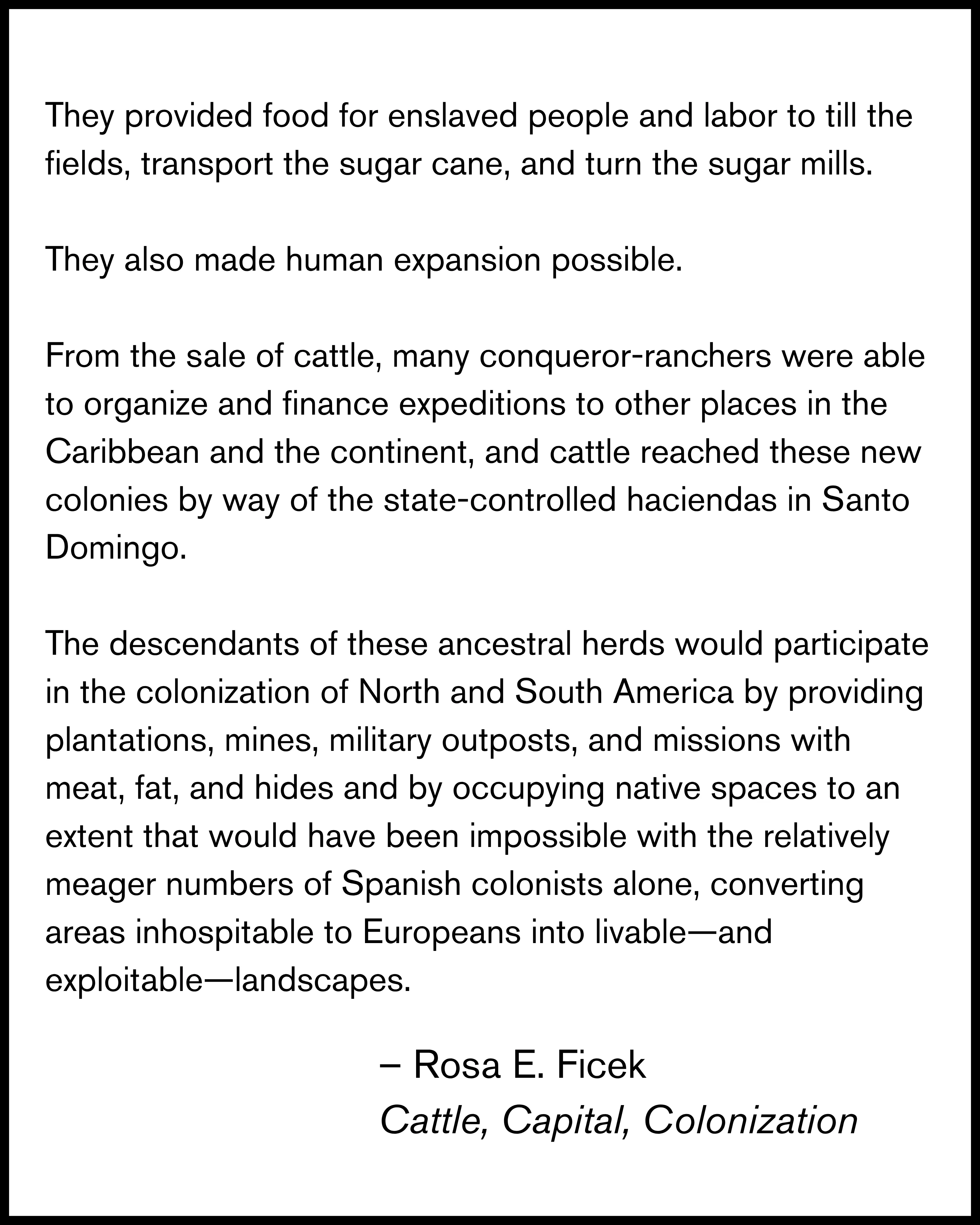
As for the research, it was one thing leading to another. Every time I went further, I realized how much less I actually understood — and I saw more and more connections within the themes of the intertwined oppressions and the ancient lineage of exploitation and resistance. The most shocking thing was discovering that there were, and are, cow goddess laments within other traditions. I was sitting down to write a cow goddess lament, and then I found that within Zoroastrianism and Hinduism there are cow goddess laments from thousands of years ago. I realized I was sitting within this tradition, feeling a connection to the people who were writing and reading and listening to those works, as well as to the animals that were around back then, and to the people who were also being exploited by these systems of power. It’s a through-line in history and prehistory, in which people understood how the animals were being treated, knew it was wrong, and advocated — even the people who aren’t recorded.
From my interview with Haz Vegan.