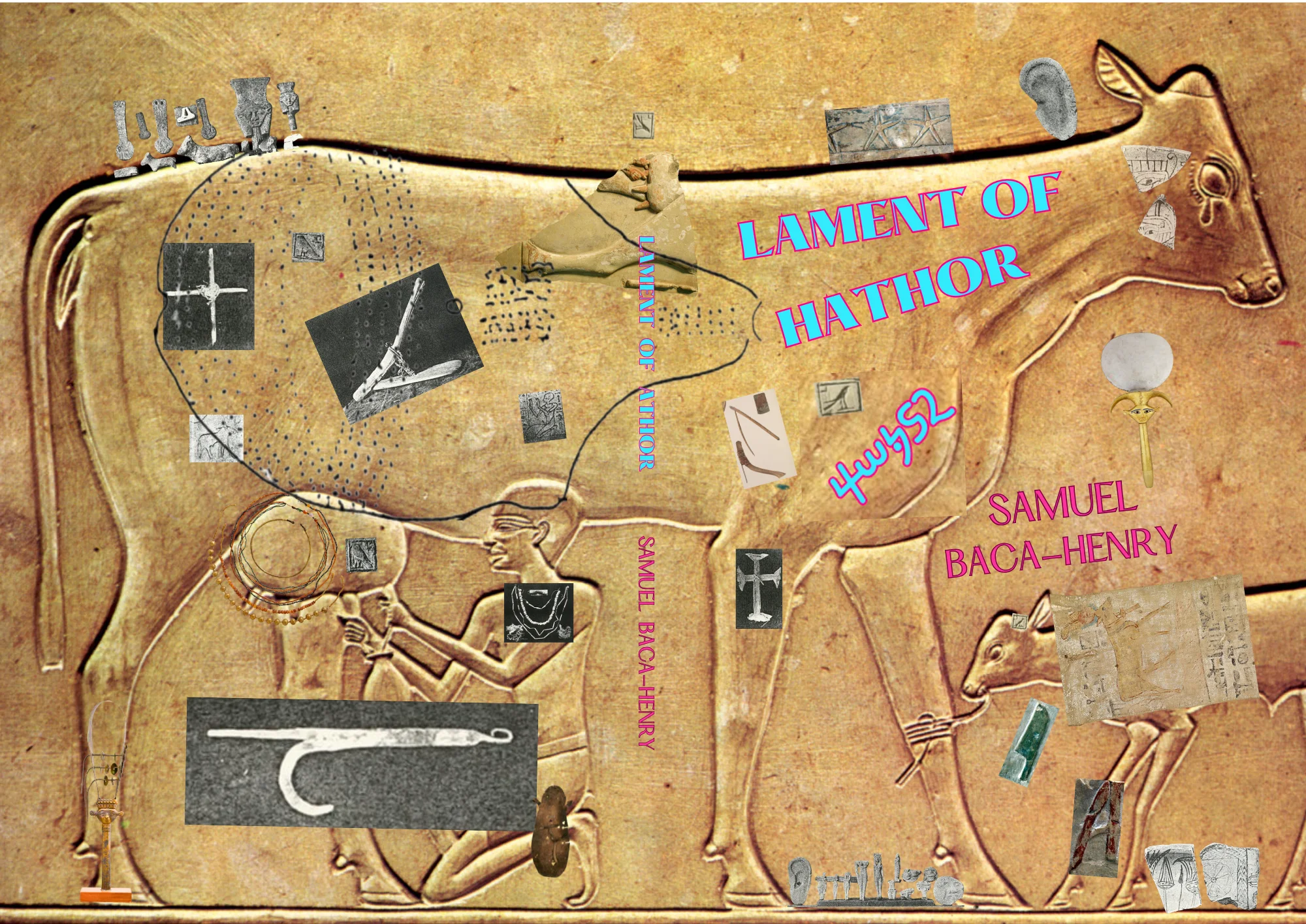








The lamentation is one of the oldest forms of oral and written literature within the so-called Fertile Crescent and Egypt (and myriad forms globally).
It is typically a raw, inconsolable expression of grief and rage at the destruction of a city-state, society, and/or the deaths or disappearances of loved ones and/or deities.
The Lament for Ur3 is a well-known Sumerian lamentation for the destruction of their city-state Ur by the Elamites circa 2000 BCE.
The Lamentations of Ipuwer is a circa 2000 - 1800 BCE Egyptian literary work that laments the upheaval and disorder of society after the fall of a strong central pharaonic state. It may be a work of conservative authoritarian theocratic political propaganda showing the risks of a loosening grip on absolute power and the benefits of a strong patriarchal pharaonic rule.
The Lamentations of Isis & Nephthys is a circa 2nd century BCE recording of a version of the much-older tradition of the despair of the Egyptian goddess-sisters Isis & Nephthys after their brother Set (husband of Nephthys) killed their brother Osiris (husband of Isis).
This book began as a lamentation, but incorporates other genres, including Sebayt (a.k.a. Instructions or Proverbs).
These collections of maxims, aphorisms, proverbs, and other advice were common in many of the book’s regional and temporal cultures. Oftentimes they took the form of advice from a father to a son (elite or royal). They were useful ethical and practical guides to rule and behave in society. In the European Middle Ages and Renaissance, this genre continued as the “Mirror For Princes” literary tradition.
3 “Ur” sounds like “Hathor,” so I chose this title.
I found it difficult to separate “Ancient Egypt” from its adjacent and semi-adjacent cultures or its prehistoric pasts. After all, they were trading, warring, marrying, occupying, cattle-raiding, mining, sailing, influencing, etc.
Borders are not as fixed as contemporary maps make them appear (and impose upon regions and peoples).
The scope of the Egyptian kingdoms’ spans of control varied greatly throughout the time periods of this book.
At times there was no single state of Egypt.
At other times, Egyptian pharaohs exercised control over parts of Nubia, the Levant, Mesopotamia, and parts of contemporary Libya, Chad, the northwestern Arabian desert trade routes and mines, and other regions outside contemporary Egypt’s borders (which present total area was not always under the authority of an Ancient Egyptian state).
This control varied from tributes, ransoms, vassalage, allyship, and occupation.
And in several periods, kingdoms from other areas exercised control over parts or all of former and contemporary Egyptian regions.
These were intermingled cultures. We find temples to Levantine deities within Egypt and to Egyptian deities outside Egypt.
Therefore, I bring the book within its northeast African setting as well as the eastern Mediterranean, Anatolia, the Levant, Mesopotamia, Persia, and the Indian subcontinent.
I interweave (and at times subvert) goddesses/gods/sacred cows and literary/mythological/philosophical works, histories, and symbols from these areas.
In future versions or stories, I will expand further and incorporate peoples, animals, and deities from additional regions in greater depth.
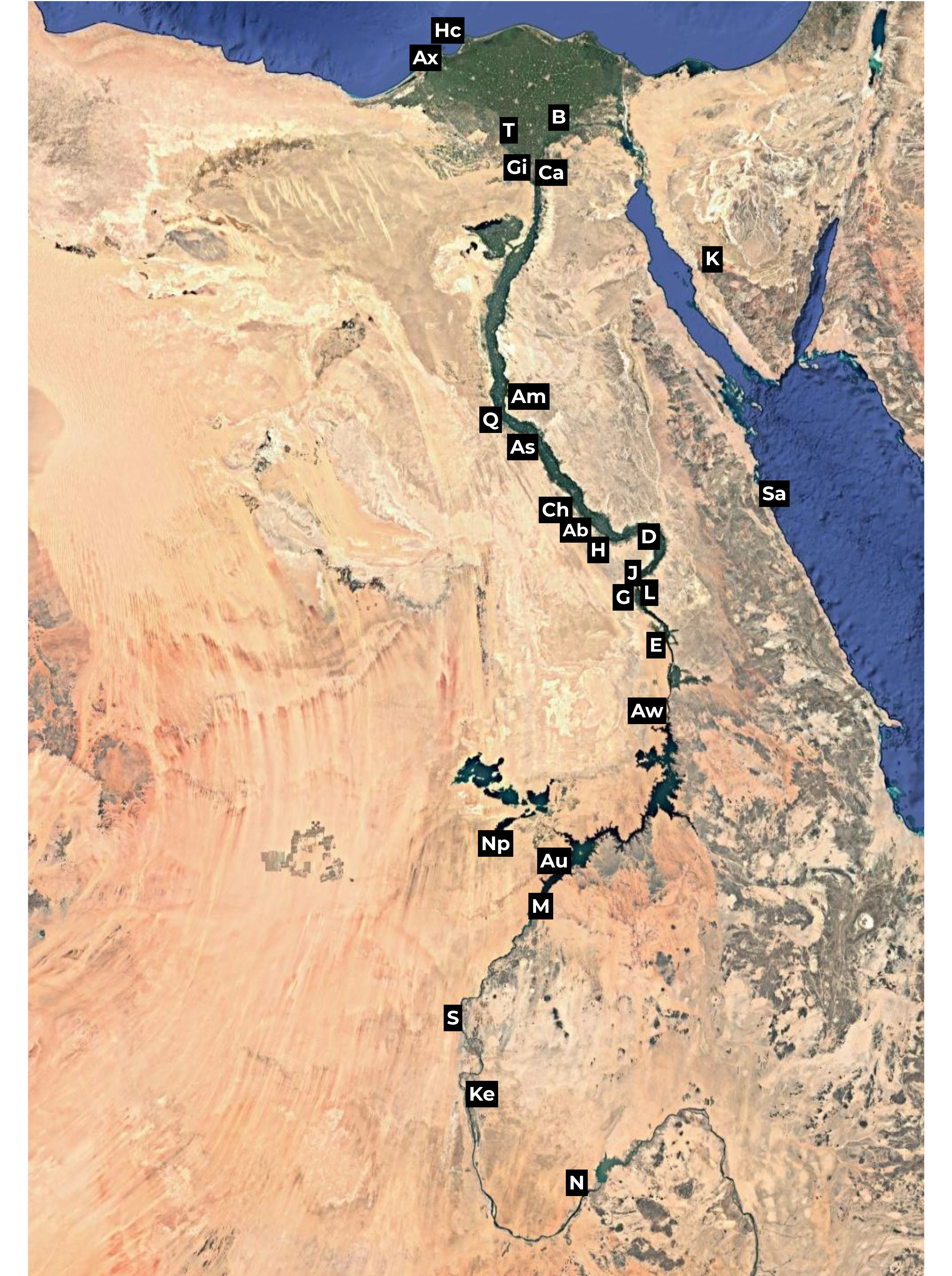
B — Bubastis (Per-Bast)
D — Dendera (Iunet)
E — Edfu (Behdet)
G — Gebelein (Per-Het-Heru)
H — Nag Hammadi
J — Deir el Medina (Djeser-Djeseru)
K — Serabit el-Khadim (Djeser-Mefket)
L — Luxor/Thebes (Waset)
M — Mirgissa (Iken)
N — Napata & Gebel Barkal (Dju-wa’ab)
P — Giza (Rostau)
Q — Cusae (Qis)
S — Sedeinga (Atiye)
T — Terenuthis/Tarana (Mefket)
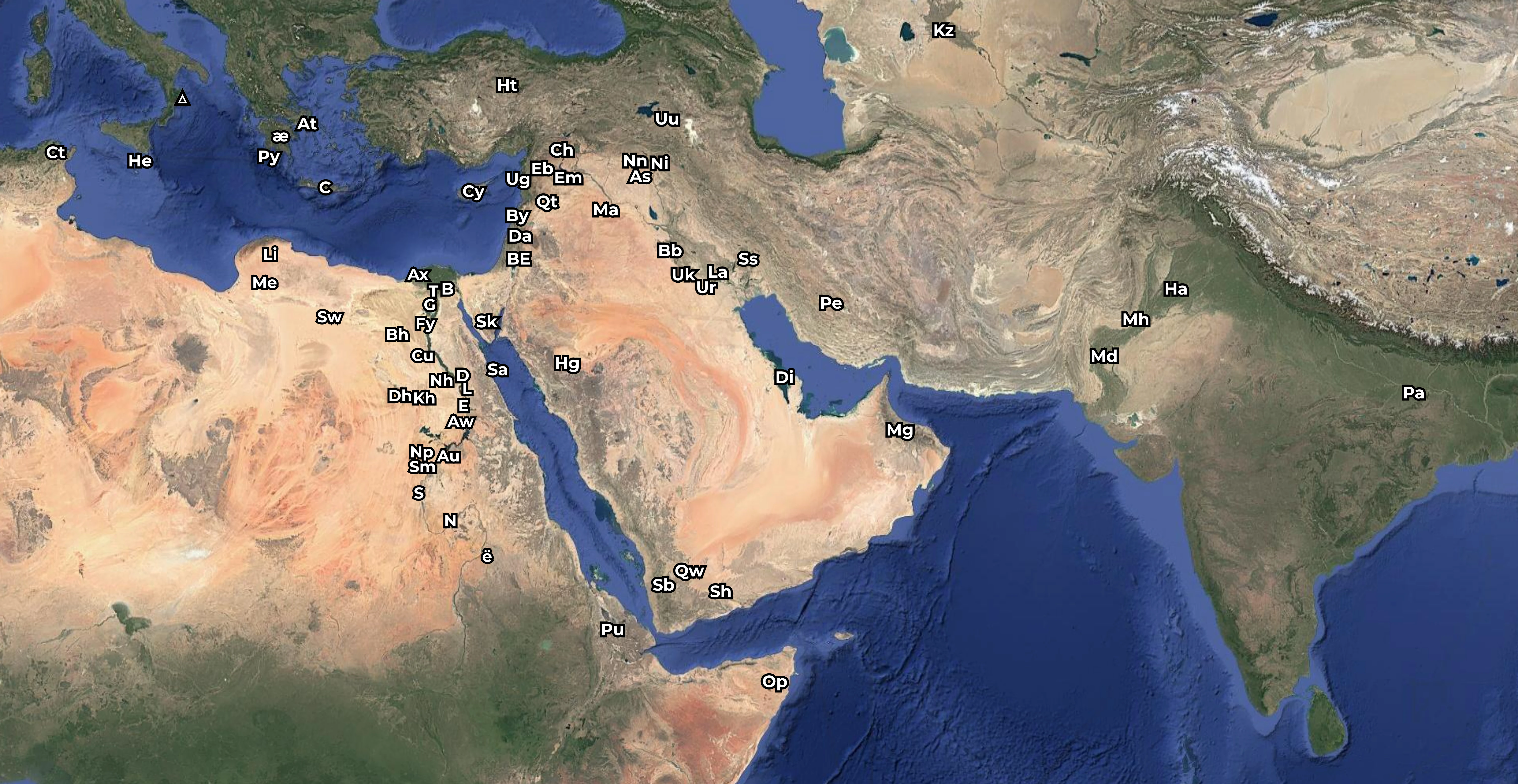
æ — Mycenae (Aqaiwasha)
As — Assur
At — Athens
Au — Abu Simbel
Aw — Aswan (Swenett)
B — Bubastis (Per-Bast)
Bb — Babylon (Sangar)
BE — Beth-El
Bh — Bahariya Oasis (Djesdjes)
By — Byblos (Kebny)
C — Crete (Keftiu)
Ch — Carchemish
Ct — Carthage
Cu — Cusae (Qis)
Cy — Cyprus (Alashiya)
D — Dendera (Iunet)
Da — Dan
Dh — Dakhla Oasis
Di — Dilmun
E — Edfu (Behdet)
Eb — Ebla
Em — Emar
ë — Meroë (Medewi)
Fy — Fayyoum (Shedet)
G — Giza (Rostau)
Ha — Harappa
He — Helios (mythical)
Hg — Hegra
Ht — Hattusa
J — Deir el-Medina (Set-Ma’at)
Ka — Kadesh (Qedesh)
Kh — Kharga Oasis
Kh — Khwarazm
Km — Khartoum
L — Luxor/Thebes (Waset)
La — Lagash
Li — Libu (nomadic tribe; Ribu)
Ma — Mari
Md — Mohenjo-Daro
Me — Meshwesh (nomadic tribe)
Mg — Magan
Mh — Meluhha
N — Napata
Nh — Nag Hammadi
Nh — Nineveh (Nil)
Np — Nabta Playa
Op — Opone
Pa — Pataliputra
Pe — Persepolis
Pu — Punt (Pwenet or Ta Netjer)
Py — Pylos
Qa — Qatna
Qw — Qarnawu (Minaean)
S — Sedeinga (Atiye)
Sb — Sanaa (Sheba)
Sh — Shabwa (Hadhraumut)
Sk — Serabit el-Khadim (Djeser-Mefket)
Sm — Semna
Ss — Susa
Sw — Siwa Oasis (Sekht-am)
T — Tarrana (Mefket)
Ug — Ugarit
Uk — Uruk
Ur — Ur
Uu — Urartu (Nairi)
△ — Croton
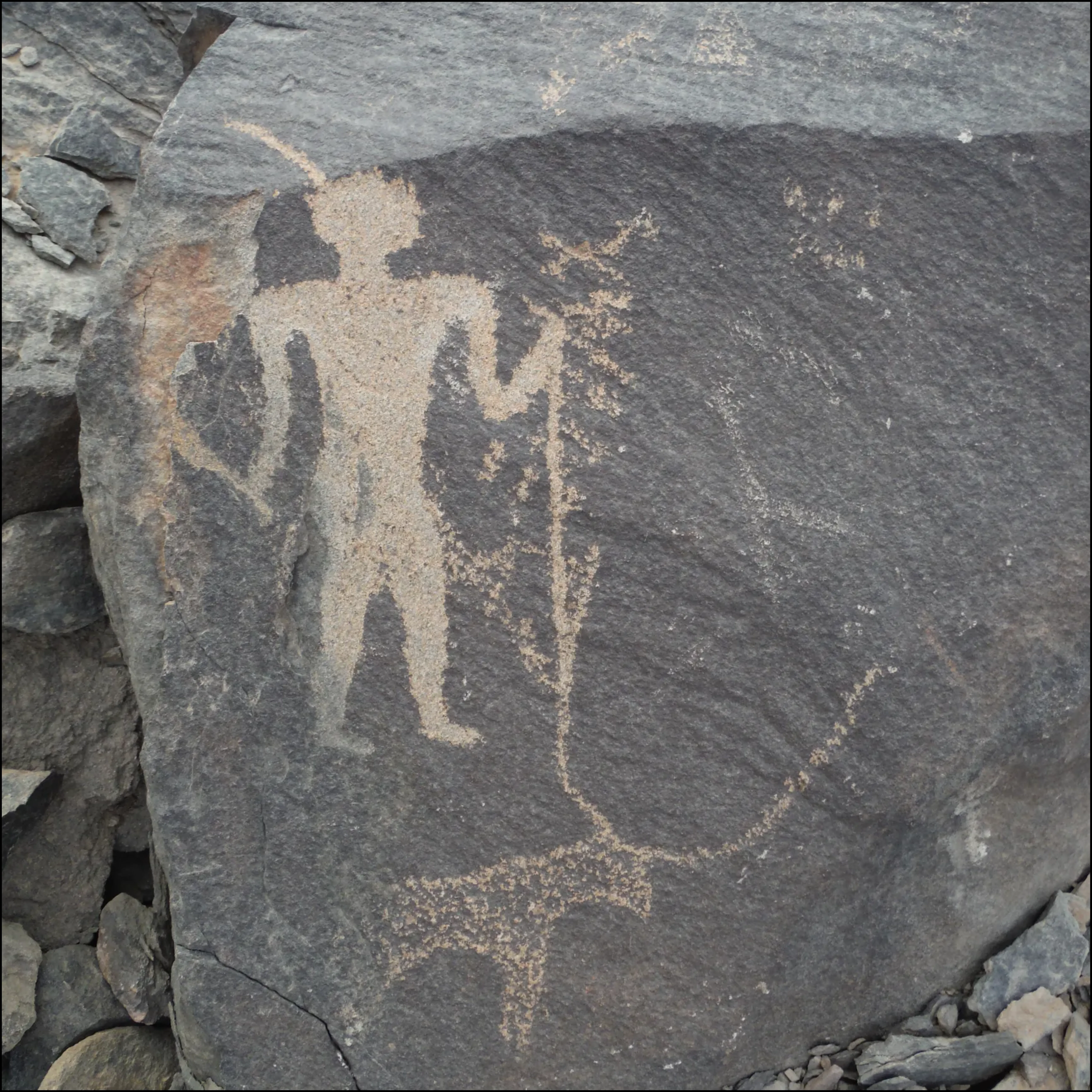
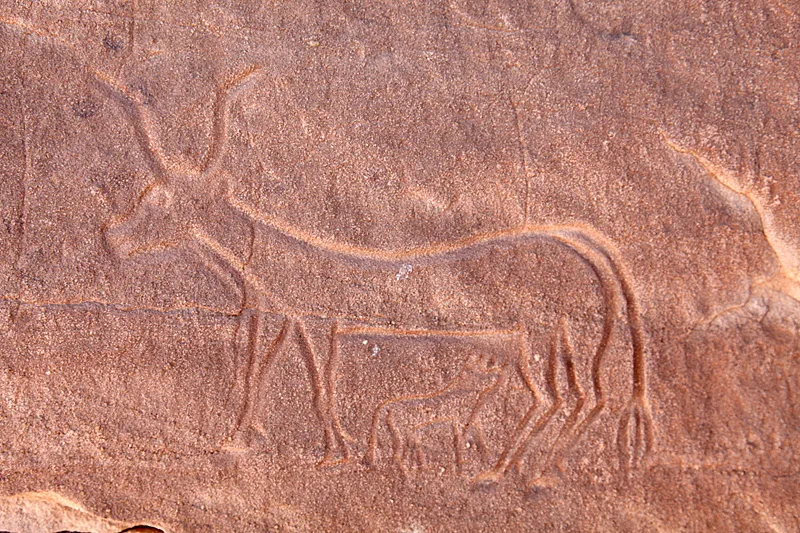
There is no thing called Ancient Egypt.
Is it the time of the Great Pyramids of Giza? Is it the time of Pharaoh Tutankhamun? Is it the time of Cleopatra? Is it the time of Roman occupation? If so, pre- or post- Roman persecution of Christians? Or is it the nomadic peoples who were harassed and subjugated, whose stories are not the same as those of whatever is meant by “Ancient Egypt.”
This book’s setting spans the time period from the lush Green Sahara region which thrived during the last Glacial Period (circa 115,000 – c. 11,700 years ago) until perhaps the 3rd century of the Common Era (CE/AD).
Its regions and cultural influences, allusions, and characters span from contemporary Libya, Italy, and Nepal.
Consider time flattened a bit when reading this book.
One may be disposed to see some throughline of “progress” via such references that might lead one to conclude that in the Early Bronze Age people were one way and over time they became more virtuous in their treatment of non-human or human animals, reaching an inflection point with the Zoroastrian, Hebrew, Jewish, early Christian, or Vedic/Hindu/Jain/Buddhist peoples.
That is not my intention.
I have tried to demonstrate and uplift those throughout all times (including pre-human hominids) who have advocated, witnessed, empathized, and helped the non-human animals so that we may be sustained, taught, inspired by, and thereby to hold ourselves accountable to those who fought before us.
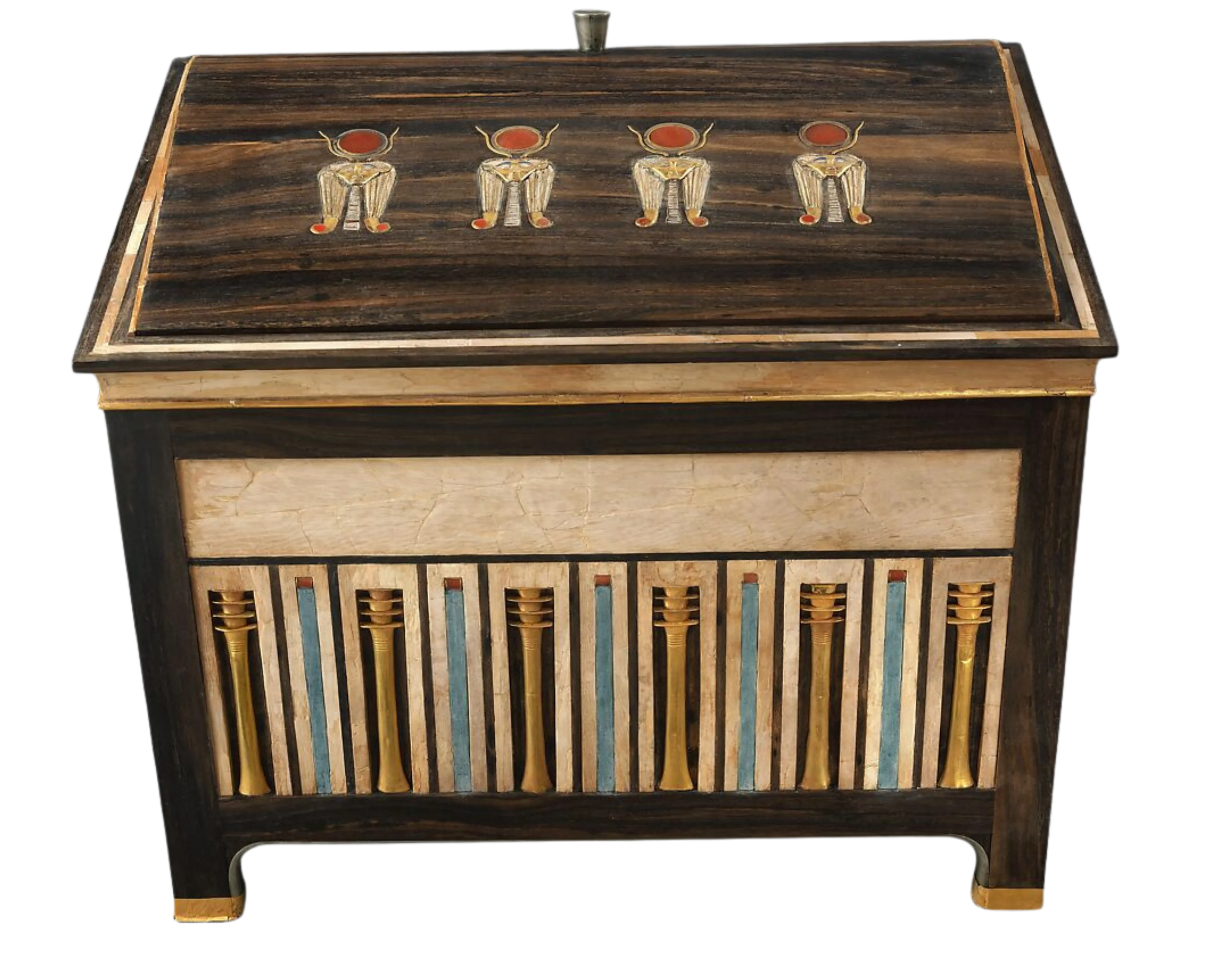
Some names are names that peoples use themselves for their spaces, selves, deities, places, bodies of water, non-human animals, mountains, valleys, stars, neighbors, and other things within their own and their historical antecedents’ (actual or claimed and/or mythological/cultural) times and places.
These are called Endonyms.
Other names are names that peoples, cultures, etc. are called by others.
These are called Exonyms.
For example, in United States American English, the people who call themselves Catalan, Catalonian, Españoles, or Spaniards (Endonyms)4 are usually called Spanish (Exonyms).
This book strives to honor peoples’ preferences to be known with their own names.
Since things become complicated when situating the story across many cultures and places and millenia (i.e. whose Endonyms of what periods to use? and how to also honor the “others”?), this book situates itself as a recollection of a fictional Priestess of Hathor of an unspecified time period.
Thus, I try to use names that were used by Egyptian (vaguely defined) peoples themselves.5
For example, at the beginning, the book will switch from calling Hathor “Hathor” to calling her “Het-Heru”, an Endonymic name of Hathor in ancient Egyptian/Kemetic languages written in a Latinized English script.
While there are several Kemetic versions, I have chosen this one.6 If you believe I should use a different version, I would love to hear from you.
The name “Hathor” after all, is a Graeco-Romanized occupier’s form which dominated a significant set of images of ancient Egypt following the conquests by forces of the Macedonian warlord Alexander the Great and later Roman, and European occupying powers.
Those of Alexander defeated not an indigenous Egyptian kingdom, but a satrapy ruled by Achaemenid Persian conquerors led by Cambyses II, son of Cyrus the Great.
Given that some “outsiders” are incorporated within the typical Ancient Egyptian umbrella (e.g. Neith/Nit from Libya, Astarte and Ba’al from the Levant), we will further extend this principle to these peoples by using their own Endonyms rather than the traditional Egyptian Exonyms for them.
We must also note that many different beings are amalgamated under the name Het-Heru. Are we referring to Het-Heru at Iunet?7 Of Het-Heru, Mistress of the Sycamore? Of the Wandering Goddess? Of Meroitic Atari?
This book alludes to these questions and implications throughout the story while striving to maintain intelligibility and multiple interpretability.
In another example, this book calls the Mediterranean Sea the “Wadj-wer” (“great green” in Kemetic), as one would from the assumed perspective of the frame narrator Het-Heruhat, Priestess of Het-Heru.
Some might object that we ought to use the more commonly used names in contemporary Euro/Anglo/US-centric usage, even when they originate from conquering peoples. For, all peoples originate from conquered and conquering peoples.
It is true that we all originate from conquered and conquering peoples.8
Within a Dominant Discourse, this is always also the result of intentional strategy and tactics of domination and tertiary side-effects; in Ancient Egypt’s case through European/Anglo/US-centered hearkenings back to mythological Graeco-Roman origins. This is called “Western Civilization,” “Classical Civilization,” or even “the origins of Civilization” where I come from.
Rhetorically, I will say that we already primarily use Kemetic names, e.g. the deities Aten, Bastet, Bat, Bes, Geb, Imhotep, Khnum, Ma’at, Mertseger, Min, Montu, Mut, Kehbet, Nut, Ptah, Ra, Sekhmet, Seshet, Set, Sobek, Taweret, Tefnut, etc. The deities called by their Graeco-Romanized versions are indeed the minority in contemporary Euro/Anglo/US-centric usage.
As a side benefit of this stance, our knowledge of and appreciation for Het-Heru’s place in society deepens once we see peoples and places named after her.
For example, we learn that “Het-Heru” means “House of Horus” (“House of Heru”).
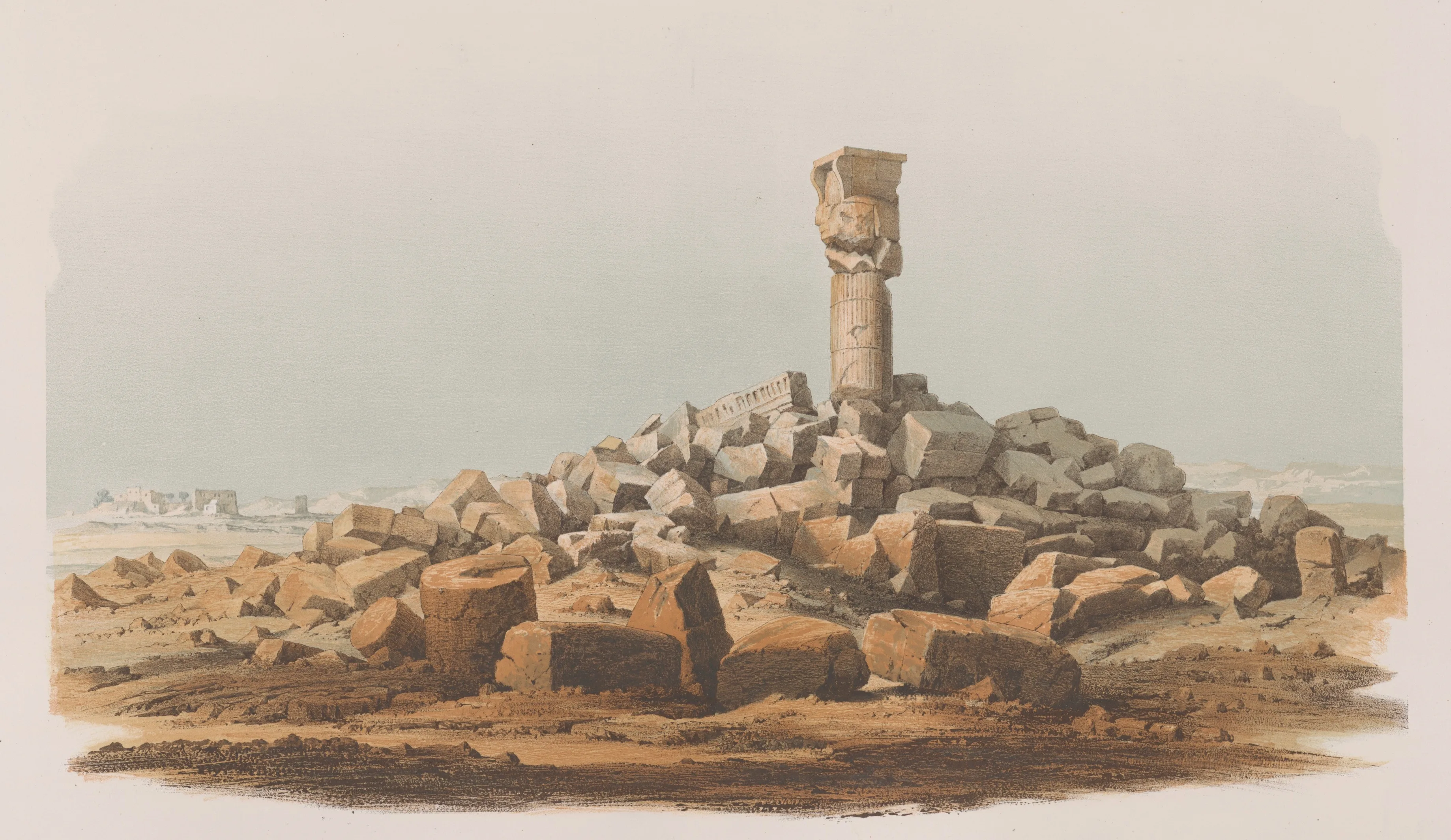
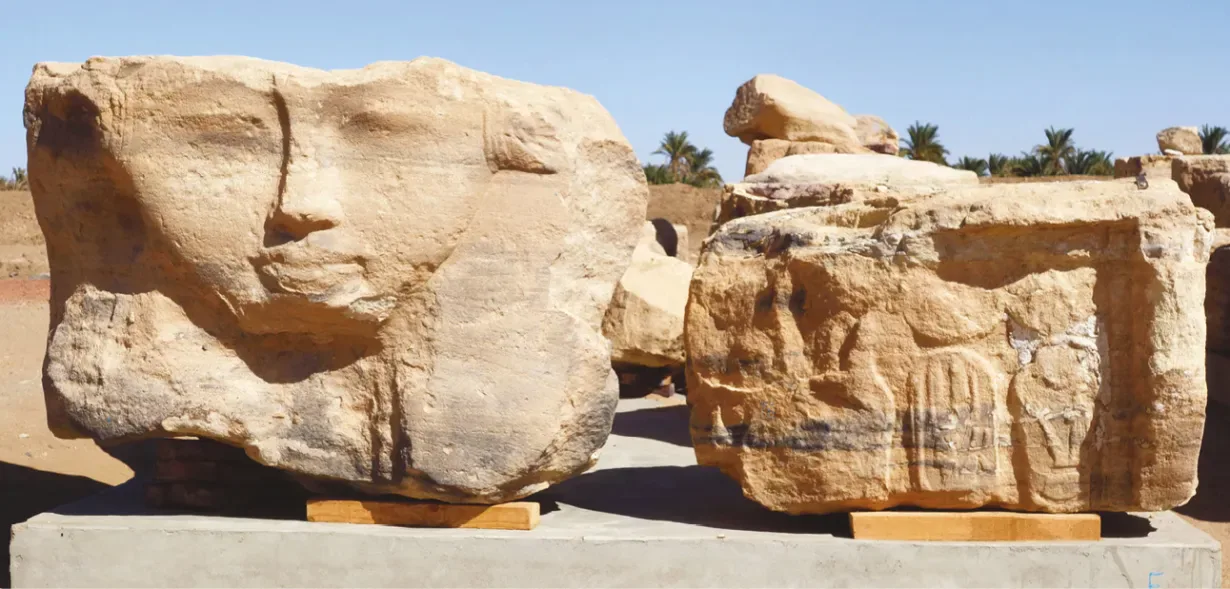
Likewise, rather than using the names Hathor and Gebelein, by using the Kemetic names Het-Heru and Per-Het-Heru, we learn that the city we know as Gebelein was named the “House of Het-Heru” (“Per” means “house”).
Similarly, we see the reference to Heru (a.k.a. Horus) in names like the pharaoh Sneferu’s.
And, this avoids the awkwardness of referring to places named after Kemetic gods by names of conquering gods (e.g. Herakleopolis, formerly Henen-Nesut, renamed by Graeco-Roman conquerors after Herakles a.k.a. Hercules).
In this stance and reasoning, I am influenced by the Afrocentrist perspectives and arguments I learned from Drs. Molefi Kete Asante, Maulana Karenga, and Nah Dove. I encourage the reader to engage with their words. Refer to the bibliography.
Some people will continue to use the “Hathor” forms, and fashions and symbolism will change over time. That’s how it always goes with names.
This book is ideological symbolic literary propaganda and principles that I hope will be relevant to and just during, yet transcend, generally beyond my own and all future times and spaces.
4 Or holding other identities but living upon contemporary Spanish territories.
5 There are certainly instances where I am inconsistent with this. I am actively switching to this format. Please email me if you spot any mistakes.
6 Note that there are several Ancient Egyptian languages and writing systems across the several thousand year time period of this book. And there were always other languages used within Ancient Egypt, including languages of power, diplomacy, administration, and trade.
7 Contemporary Dendera.
8 Note that contemporary narratives center a single evolution of homo sapiens originating on the African continent. And a seemingly infinite tree of organisms of other species and Domains, as well as noncellular, elemental, and other states of matter and non-matter in the past and through which we continually intermingle in our present.